A round-up of the latest and best insight on the rise of illiberalism in the public discourse:
Joe Lancaster: 62-Year-Old Protester Acquitted on All Charges for Wearing Penis Costume
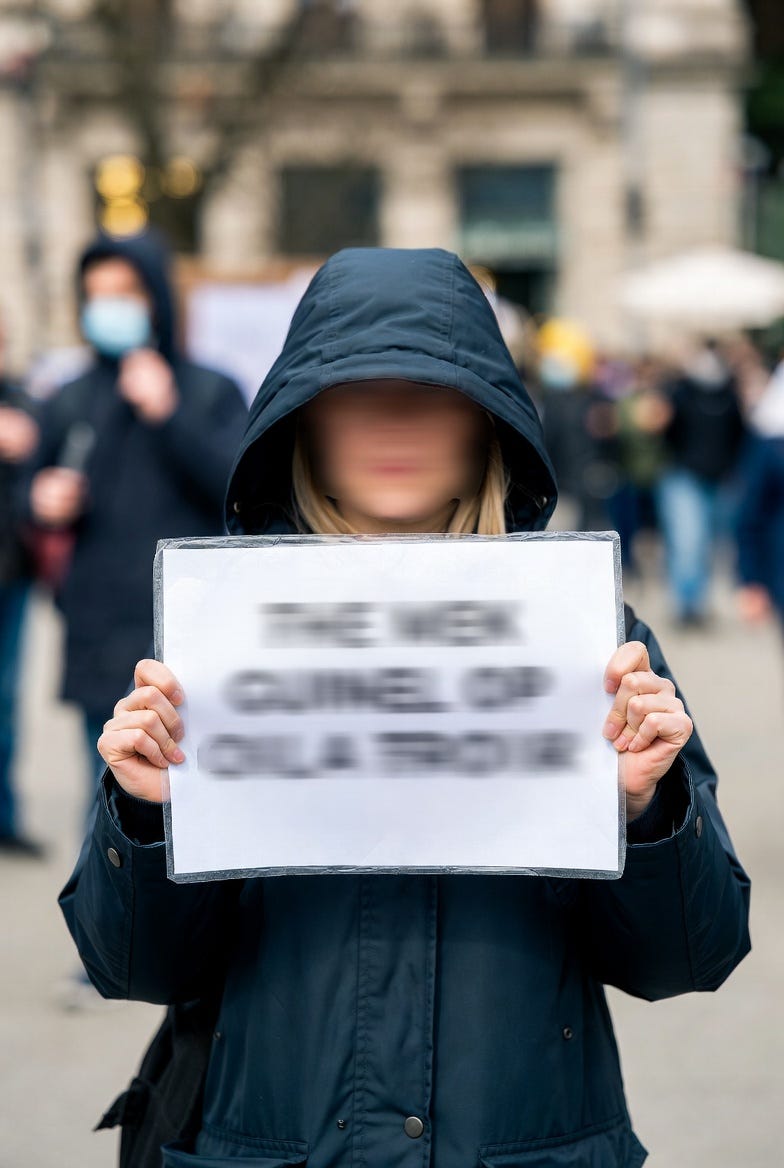
There’s only one thing we can say about this first item: even strange people have the right to free expression. Joe Lancaster at Reason explains why this category includes elderly women who register their opposition to politicians by dressing up as penises:
This week, a 62-year-old Alabama woman faced a criminal trial for wearing an inflatable penis costume during a protest.
After three hours of testimony, a judge acquitted her of all charges—a welcome result for her free speech rights.
In October 2025, Jeana Renea Gamble wore the offending phallus—holding a “No Dick-Tator” sign—at a “No Kings” protest. Responding to the scene, Cpl. Andrew Babb of the Fairhope Police Department threw Gamble to the ground and arrested her for disorderly conduct and resisting arrest.
Prosecutors later added charges of disturbing the peace and giving a false name to law enforcement—the latter because when she was asked her name, Gamble replied “Aunt Tifa,” a play on antifa, the shorthand used by antifascist activists.
The case was flawed from the start: Babb’s body camera footage shows his tone was aggressive as soon as he arrived, and he threw her to the ground less than a minute after arriving, even though she was walking away from him at the time.
Besides, wearing an offensive costume is fully protected by the First Amendment.
Fatima Gunning: Free Speech Ireland sounds alarm on “Digital Wallet”
Officials in Ireland are lobbying for a “digital wallet,” a convenient app individuals can use to store their ID documents electronically. They claim it will improve access to public services and help protect children from online harms. Free speech advocates are a little more skeptical of the wallet’s benefits:
A government spokesperson said the measure intends to make it so that people can have digital versions of their birth cert, driving license, European health card, and other official documents “stored safely and securely in a digital wallet on their mobile. This will make it much easier to access public services and verify identity both online and in person.”
At the launch of the initiative, Minister Chambers said the Digital Wallet is “designed so that all personal data is fully protected, and the user stays in control of what information they put in the Wallet and choose to share. Only the details needed for a service will be shared, and nothing more.”
However, FSI warned that the move poses a significant risk to privacy, emphasising that this is “a constitutionally protected right”.
“Speaking truth to power means protecting anonymity,” O’Reilly said, adding, “A free society, and a free press, are dependent on functions such as whistleblowing and anonymous sources.”
Noel Yaxley: When Democrats Engaged in ‘Mortal Kombat’

At Chronicles Magazine, Noel Yaxley recounts the scandal surrounding Mortal Kombat, the legendary arcade fighting game released in the early 90s. Although players never morphed into violent criminals, as certain politicians predicted, their censorship campaign against the game launched a moral panic that continues to this day:
With a new installment in the Mortal Kombat movie series set for nationwide release in early May, now is an ideal time to revisit the franchise’s origins and the role it played in one of America’s early culture wars. What began in 1992 as an arcade fighting game quickly became a cultural flashpoint, igniting fierce debates about violence, censorship, and the influence of video games on youth. The game’s graphic fatalities and unapologetic gore sparked the first major salvo in the culture war over video game content, most notably by pitting Democrats like the late Senator Joe Lieberman against the burgeoning gaming industry in congressional hearings.
…
On Dec. 9, 1993, Democratic Senators Joe Lieberman, Herbert Kohl, and Byron Dorgan held a congressional hearing on video game violence. Lieberman’s main goal was to establish a universal ratings system meant to keep violent games out of the hands of minors. In a display of collective Boomer indignation, Lieberman et al inveighed against Mortal Kombat’s brutality.
The senator from Connecticut claimed the game taught children “to enjoy torture,” describing the action of the game in this way: “the game narrator instructs the player to finish—and I quote, ‘finish’—his opponent. The player may then choose a method of murder, ranging from ripping the heart out to pulling off the head of the opponent with spinal cord attached.” Kohl argued these games tell kids that to win you must kill, a message he said “pollutes our society.” Bill White, Sega America’s Vice President, was grilled by Dorgan about why kids weren’t protected from this “trash.” The industry was issued an ultimatum: self-regulate or face federal intervention.
Around X
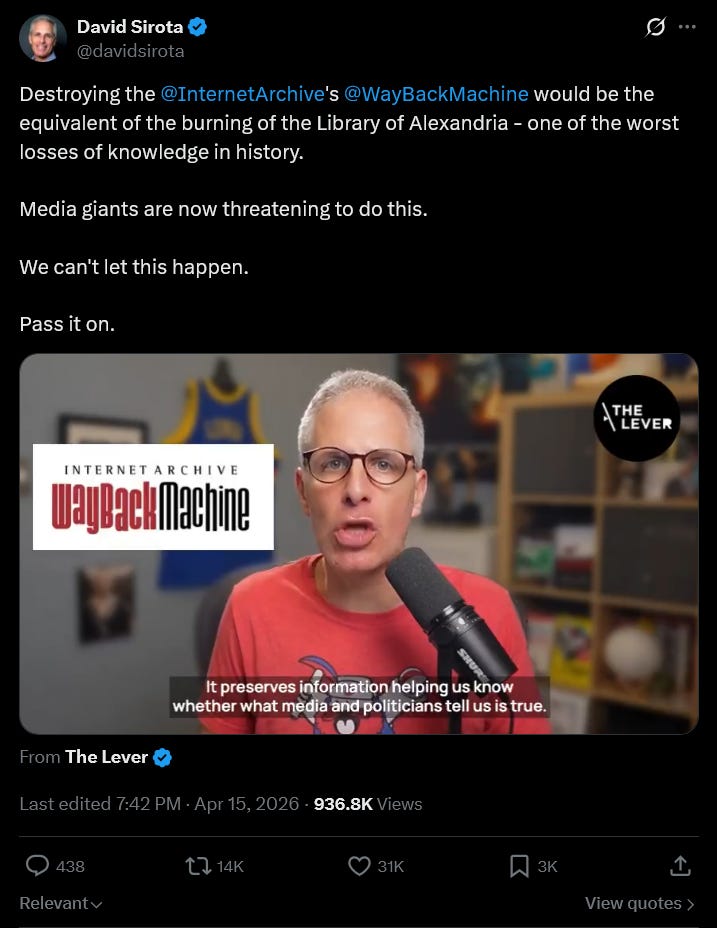
The Internet Archive’s Wayback Machine is an invaluable tool for preserving and accessing content. If major media corporations get their way, the site will disappear.
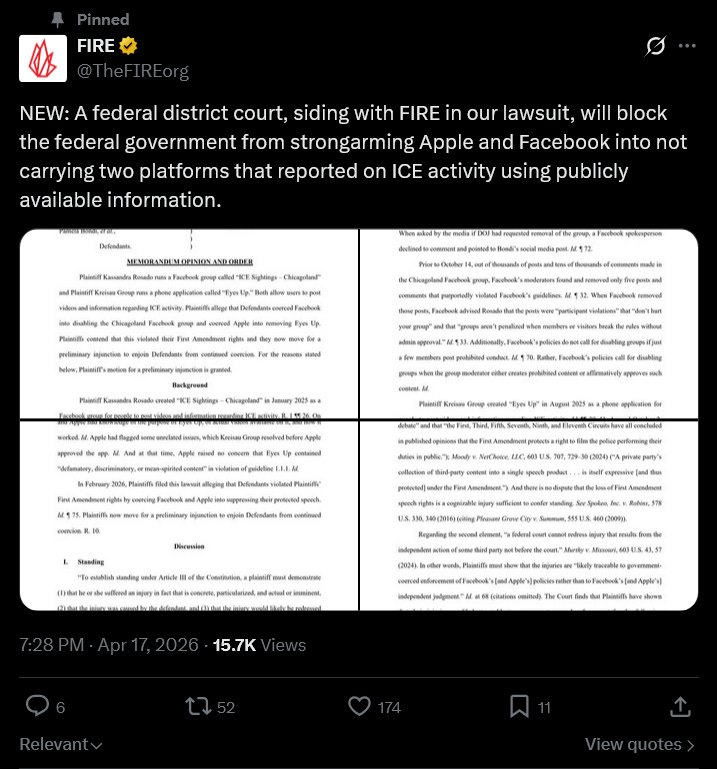
The federal government tried to prevent Apple and Facebook from carrying apps that report the activity of Immigration and Customs Enforcement (ICE). The Foundation for Individual Rights and Expression (FIRE) filed suit on the platforms’ behalf—and won.
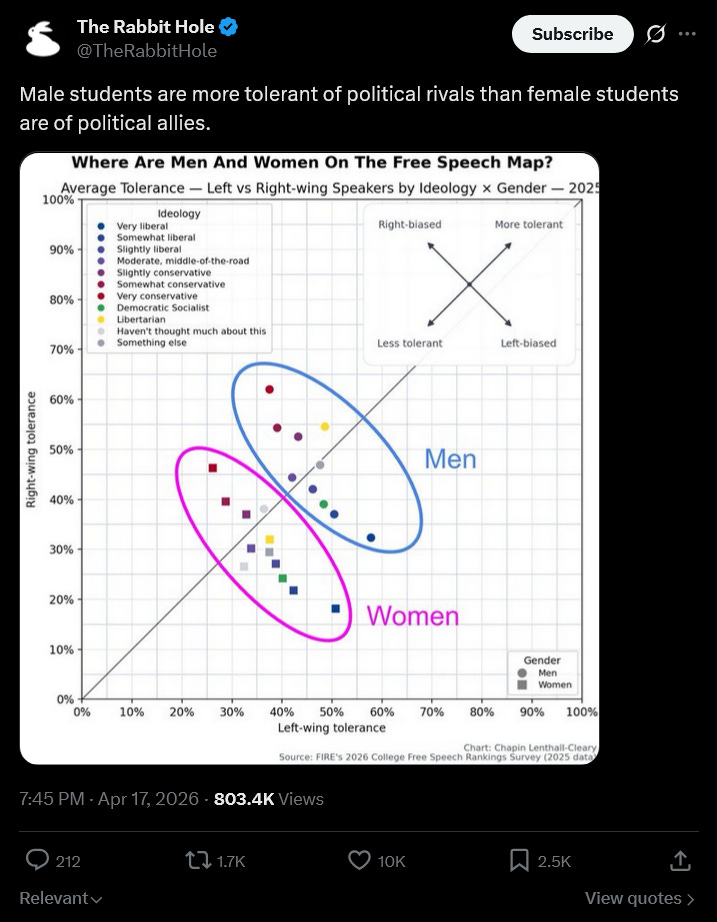
Recent survey data shows that overall tolerance for opposing political views is low among both male and female college students. But men generally display greater tolerance for their political rivals than women do for their political allies.