A round-up of the latest and best insight on the rise of illiberalism in the public discourse:
Peter James: Why is a chatbot deciding what books our children read?
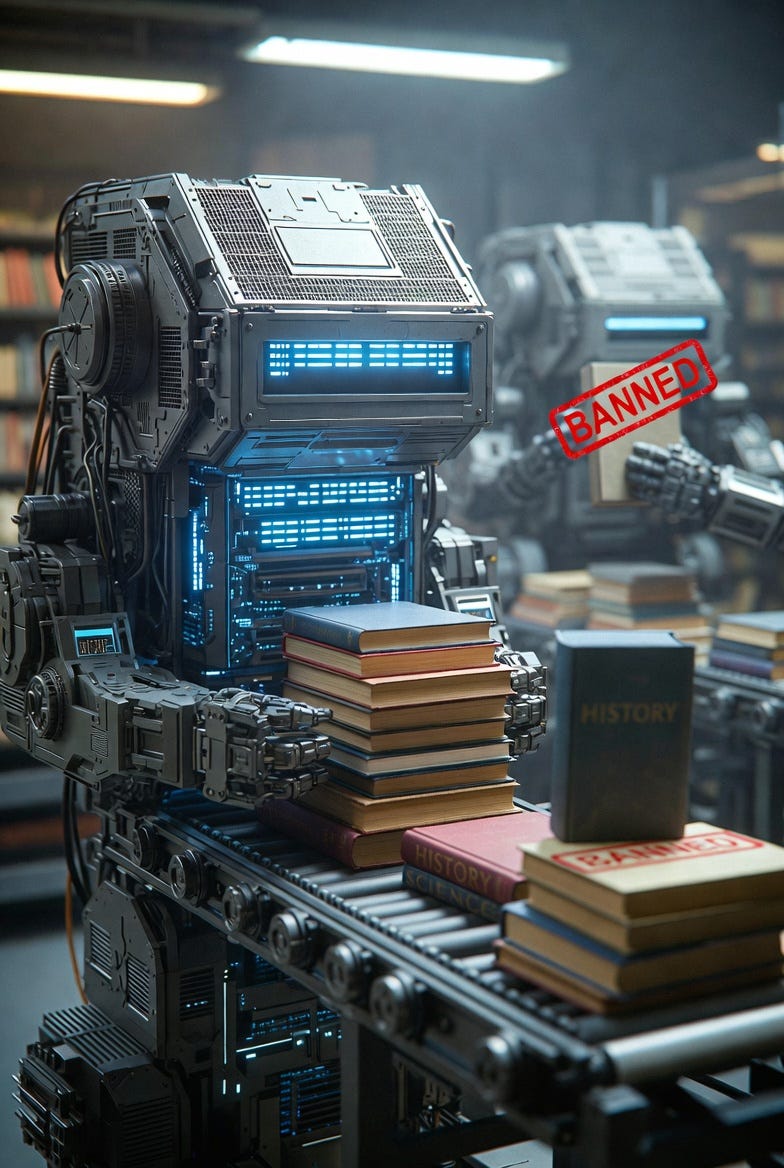
Revolutionary as it may be, AI still leaves a lot to be desired. ChatGPT and its sibling large language models routinely hallucinate quotes and misreport basic facts, so why would we trust them to ban books from school libraries? That reasonable question comes from Peter James writing at The Spectator:
A school in Greater Manchester has stripped 193 books from its library because they are ‘inappropriate’, liable to upset pupils and thus a safeguarding risk. Among the dangerously destabilising material: Michelle Obama’s memoir and George Orwell’s Nineteen Eighty-Four. Who was entrusted with identifying these literary IEDs? An over-zealous head? A prurient librarian? A demented child psychologist? Nope. A humble AI bot.
While writing my latest novel, The Hawk Is Dead, much of which is set in Buckingham Palace, I asked ChatGPT to produce a simple floor plan. Not a tough assignment – much less taxing than diagnosing nearly 200 books as existential threats to adolescent wellbeing. It got the Palace’s orientation wrong. For more than 200 years, the East Wing has faced the Mall. According to ChatGPT, it now faces north.
And yet this is the oracle now consulted on what children may or may not read. Still, there is a certain grim logic to it. If you want to keep young minds safe from dangerous ideas, why not put a system in charge that struggles to grasp reality in the first place?
Angel Eduardo: Jimmy Kimmel proves the White House can’t take a joke
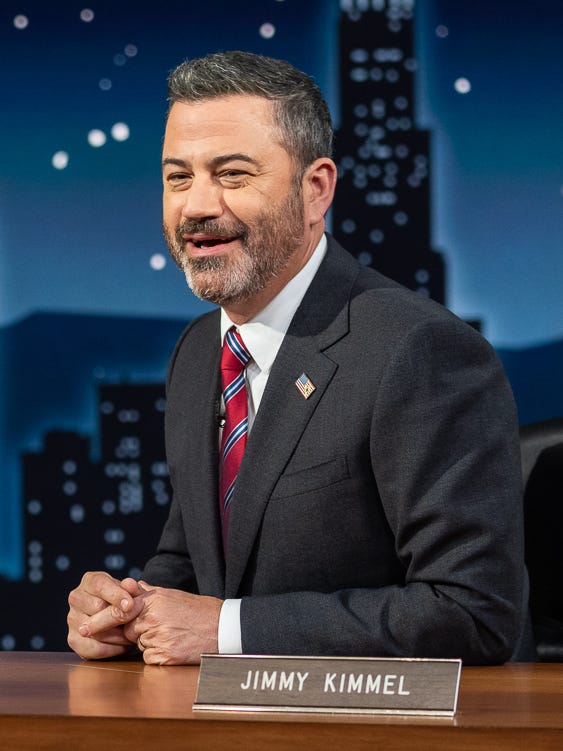
Late-night host Jimmy Kimmel has developed a habit of offending powerful politicians. While many Americans may not like his sense of humor, his rhetoric is not “hateful” (whatever that term means) and it’s fully protected by the Constitution. So argues Angel Eduardo at UnHerd:
Déjà vu has never been less fun.
Last week, late-night host Jimmy Kimmel made a joke during his show’s opening monologue that upset people in the White House, which led to demands that ABC “take a stand” against his “hateful and violent rhetoric.”
There’s a reason this story feels familiar. Last year, late-night host Jimmy Kimmel made a joke during his show’s opening monologue that upset people in the White House, which led to demands that ABC “take action on Kimmel” for his “intentional effort to mislead the American people”.
Back then, the one leading the charge was FCC Commissioner Brendan Carr. Now, it’s First Lady Melania Trump. In both cases, the reactions to Kimmel’s comments occurred in the wake of violence. Last year, it was in response to Charlie Kirk’s assassination at Utah Valley University. This week, it’s about the gunman who opened fire at the White House Correspondents’ Dinner.
The trouble is, Kimmel’s so-called “hateful and violent” remarks — that Melania possesses “a glow like an expectant widow” — were made during his April 23 monologue, two full days before the WHCA. In that context, it’s clear that Kimmel’s quip was a “Trump is really old” joke, and not a “Trump is going to be the subject of an assassination attempt this Saturday” joke. Arguing otherwise would require Kimmel to possess a time machine.
More importantly, however, the government has no authority to police the speech of television networks or their late-night hosts, nor can it flex its institutional power to pressure them to do so. The former is a clear violation of our First Amendment, while the latter is a sneakier manifestation of jawboning, where the government tries to do indirectly what it cannot do directly. Either way, it’s unconstitutional.
Stephen Presser: The Godfather of American Law
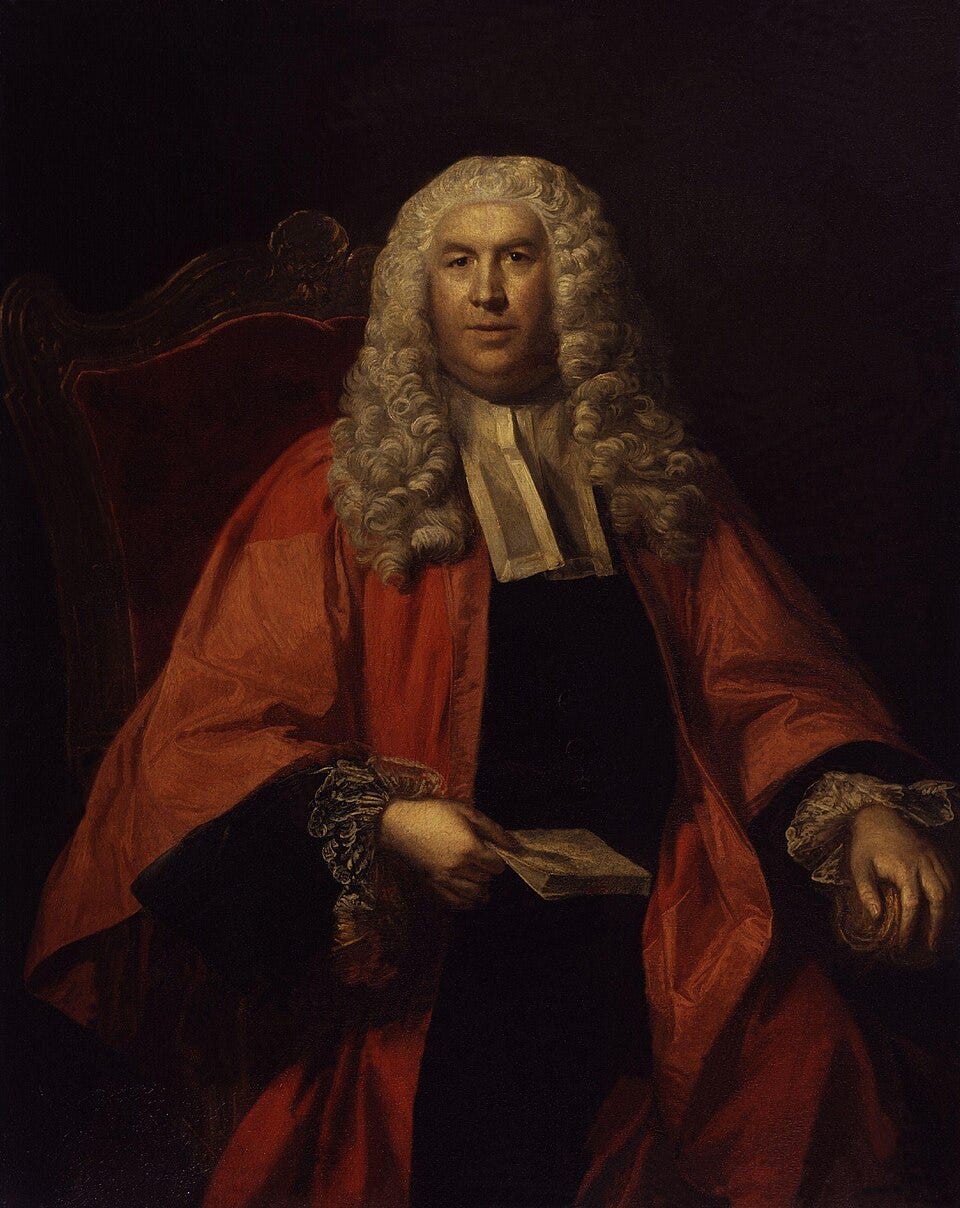
Few Americans have ever heard of William Blackstone. That’s a real shame, because this legal scholar and intellectual giant profoundly influenced the drafting of the US Constitution. At Chronicles, Stephen Presser examines some of Blackstone’s most important contributions to American law—including the belief that restrictions on government protect individual liberty:
Sir William Blackstone is the godfather of American law. His greatest contribution is the Commentaries on the Laws of England, a four-volume, comprehensive treatise on English common law—a body of judicial decisions based on customs, statutes, and reason stretching back centuries, and, according to Blackstone, based on a divinely inspired law of nature. Written between 1765 and 1769, the Commentaries were originally delivered as lectures and intended to serve as guides for his aristocratic students at England’s Oxford University in their role as justices of the peace and presiders over the courts.
The books were an instant hit in England, but, remarkably, they had an even greater influence in the United States. The best description of the American Revolution, as far as paleoconservatives are concerned, is that it was Englishmen fighting Englishmen over the rights of Englishmen. And it was to Blackstone that American Whig lawyers turned for definitions and elaboration of the protections to person and property they claimed against King George III.
…
While Blackstone’s views were essentially conservative, he also set forth in the Commentaries a number of constitutional principles that reflect classical liberal notions of the Enlightenment. These were quite consistent with the Lockean thoughts that Jefferson would borrow for our Declaration of Independence, and those notions would shimmer through our Constitution of 1789 and the Federalist Papers. Among these ideas were the veneration of trial by jury, the preservation of the writ of habeas corpus, and the belief that government exists to secure the God-given rights and the private property of individuals. Blackstone clearly articulates the concept of government limited by law. If there was not yet a fully formed articulation of modern judicial review in the Commentaries, there was still the idea that the judiciary ought to be independent from the executive and the legislature.
Around X
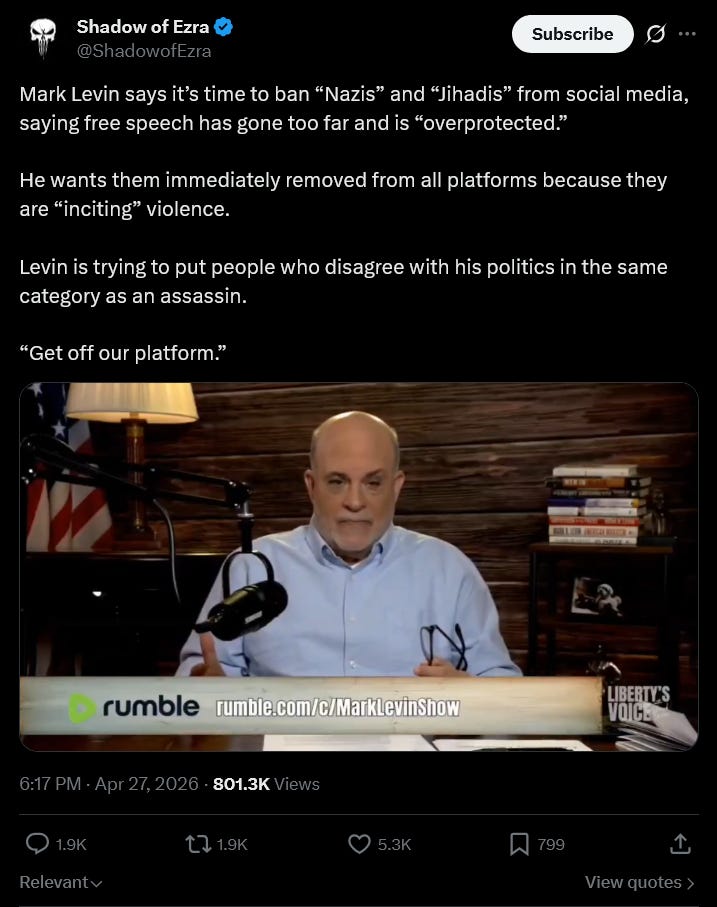
Political commentator Mark Levin makes the case for separating free speech from harmful rhetoric that shouldn’t be protected by the Constitution. We’ll let you decide if he succeeded.
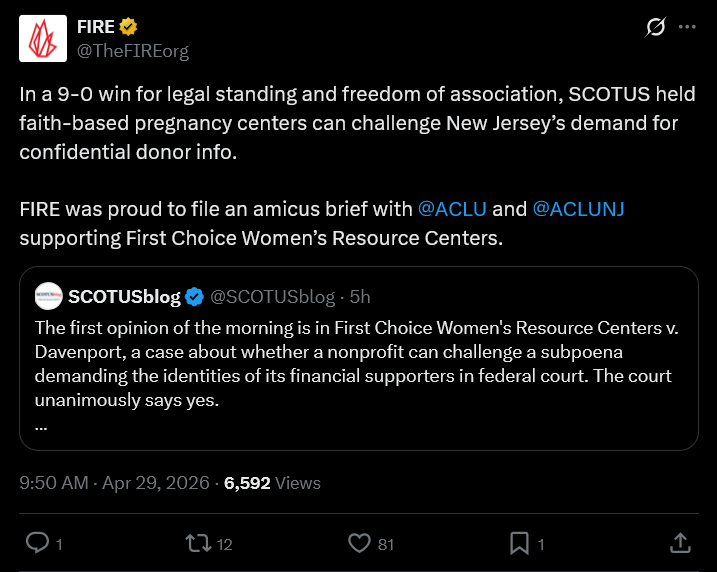
The Foundation for Individual Rights and Expression (FIRE) amplifies an important free-speech victory at the Supreme Court. The decision means state governments cannot force religious nonprofits to hand over confidential donor information.
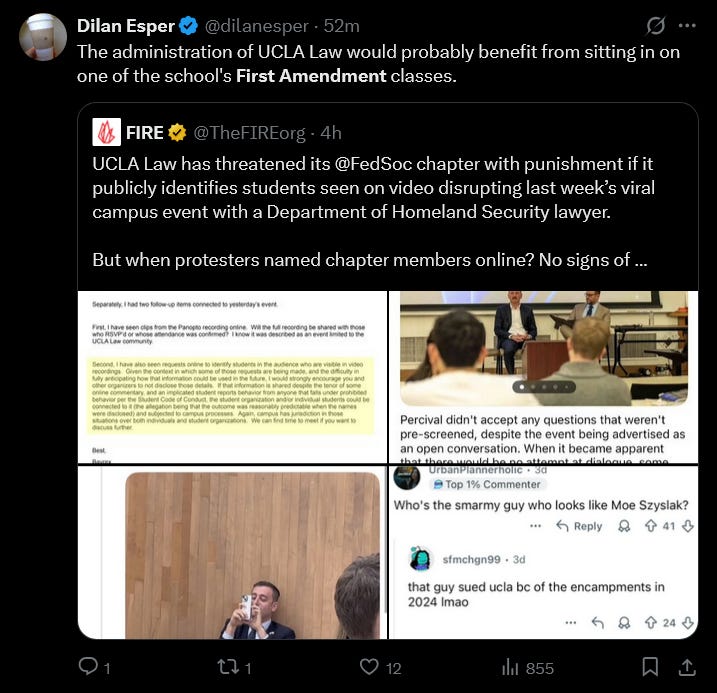
There’s something ironic, and very concerning, about a law school that doesn’t understand how the First Amendment works.