A round-up of the latest and best insight on the rise of illiberalism in the public discourse:
C.J. Ciaramella: Virginia Man Argues His ‘FTP&ATF’ License Plate Is Free Speech. The Supreme Court Might Hear His Case.
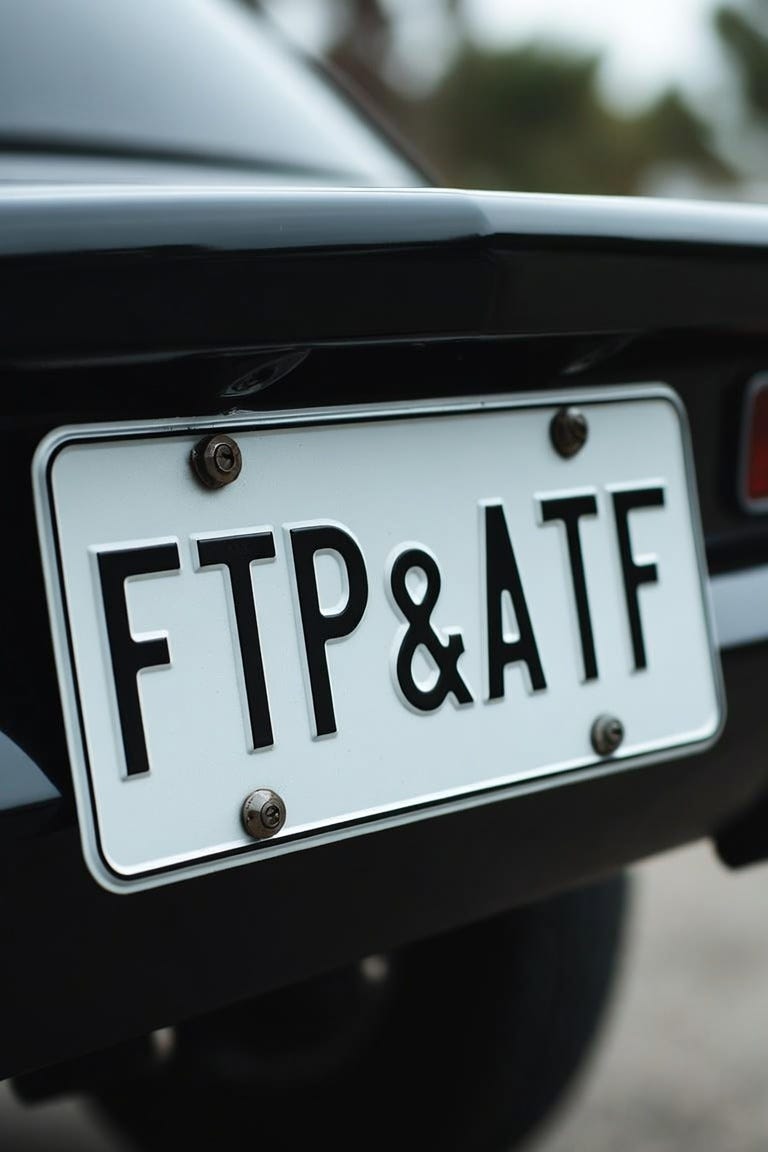
Curtis Whateley paid ten dollars for a personalized Virginia plate reading “FTP&ATF” back in 2023, an acronym he’s been upfront means exactly what it looks like, aimed at police and the Bureau of Alcohol, Tobacco, Firearms and Explosives.
He drove it for over a year without incident, until an anonymous complaint reached the DMV, which recalled the plate as vulgar and violence-promoting. Whateley sued, and a district court initially sided with the state, ruling that vanity plates are government speech and therefore exempt from ordinary First Amendment scrutiny.
The Fourth Circuit disagreed, unanimously. As the ACLU of Virginia’s Matt Callahan put it, the point is that
“the government cannot silence people for speech it does not agree with.”
Virginia isn’t taking the loss quietly: the state’s attorney general’s office says it will ask the Supreme Court to review the ruling, setting up a fight over whether the personalized combinations on nearly a million Virginia plates are private political speech or government-controlled real estate.
Alex Williams: Mary Morello, Free Speech Activist and Rage Against the Machine’s Biggest Fan, Dies at 102
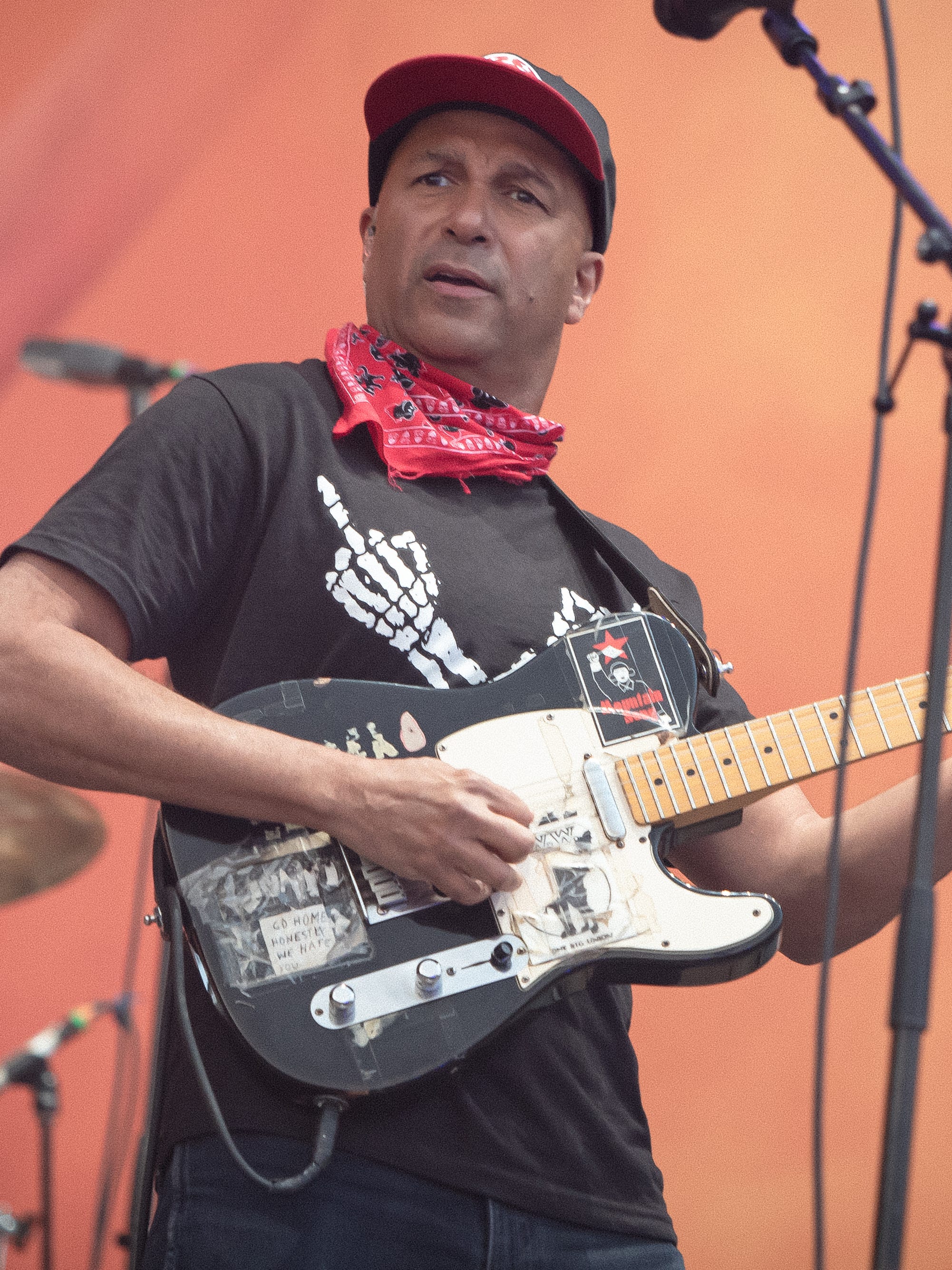
Mary Morello, the retired Libertyville, Illinois, history teacher who founded Parents for Rock and Rap in 1987 to counter Tipper Gore’s Parents Music Resource Center, died July 12 at 102. She became one of rock’s most reliable hype women, introducing her son’s band, Rage Against the Machine, from stages for three decades, memorably declaring them
“the best f - - - ing band in the universe”
The introductions made her famous, but the activism is the more interesting résumé line: First Amendment Award for her two-decade fight against music censorship.
Charlie Drape: Why former Jackson mayoral candidate sued city over council meeting removal
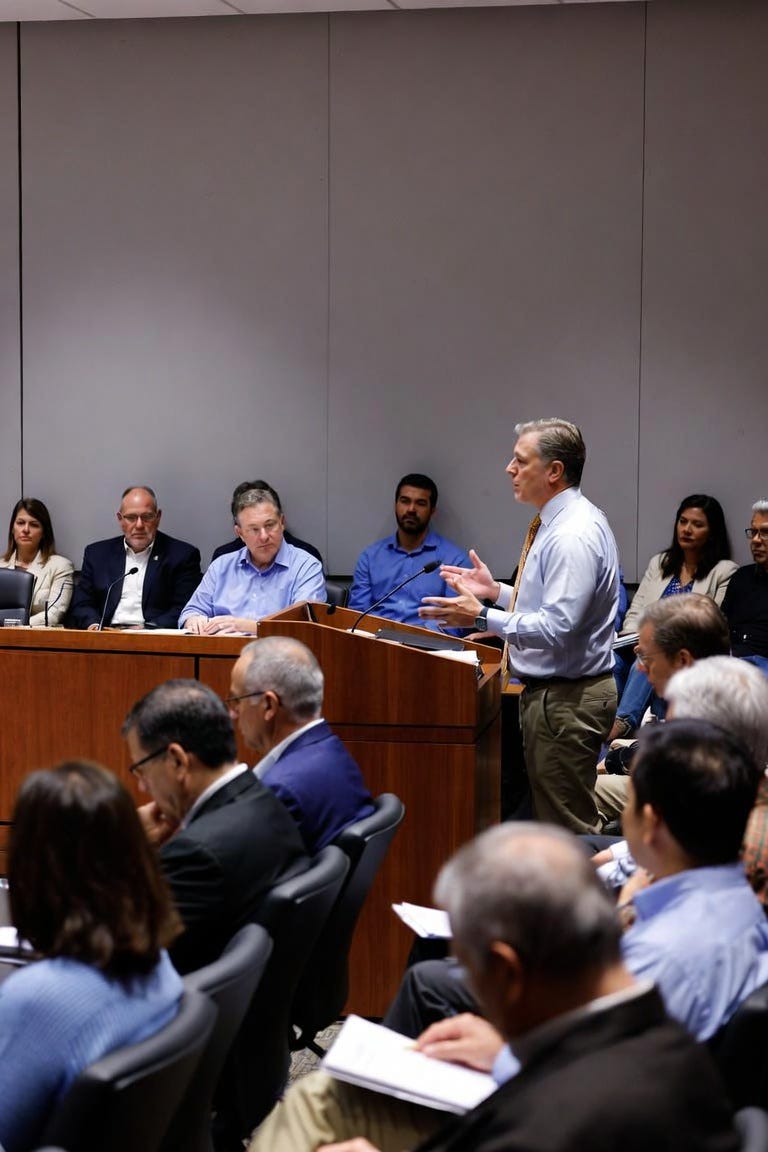
Zach Servis has spent over a year turning Jackson City Council meetings into a running First Amendment seminar. It started in May 2025, when he approached the podium in a “Zach Servis for Mayor” shirt.
A councilwoman insisted campaign apparel wasn’t allowed because City Hall doubled as a polling place, and had him escorted out by a police officer after he flipped the shirt inside-out in her office without permission.
He kept coming back, and kept getting cut off, with one councilman warning him mid-comment:
“Mr. Servis, I can’t let you sit here and disparage a city employee.”
The Foundation for Individual Rights and Expression sent the council a formal warning letter last October, arguing its ban on “personal, impertinent, or slanderous” public comment was textbook viewpoint discrimination.
Servis has now followed through on the lawsuit he’d been threatening since the day he was first hauled out of chambers.
Around X
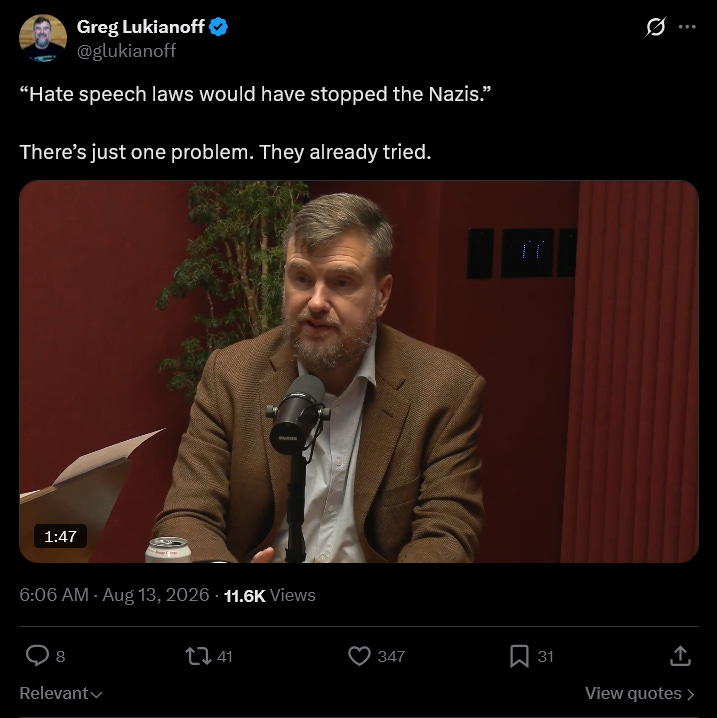
Greg Lukianoff pushes back on the perennial “hate speech laws would have stopped the Nazis” line, pointing out the inconvenient fact that Weimar Germany already had them and failed to stop the Nazis.
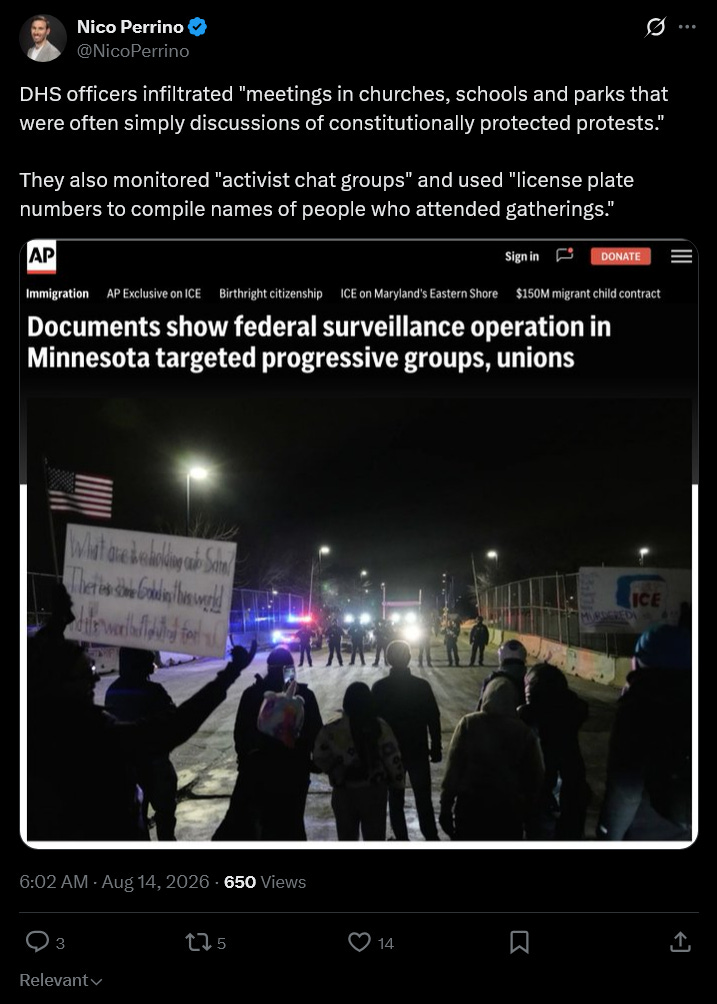
Nico Perrino flags AP reporting that DHS officers infiltrated Minnesota community gatherings that were simply discussions of constitutionally protected protests. A useful reminder that surveillance overreach isn’t a one-party affliction.
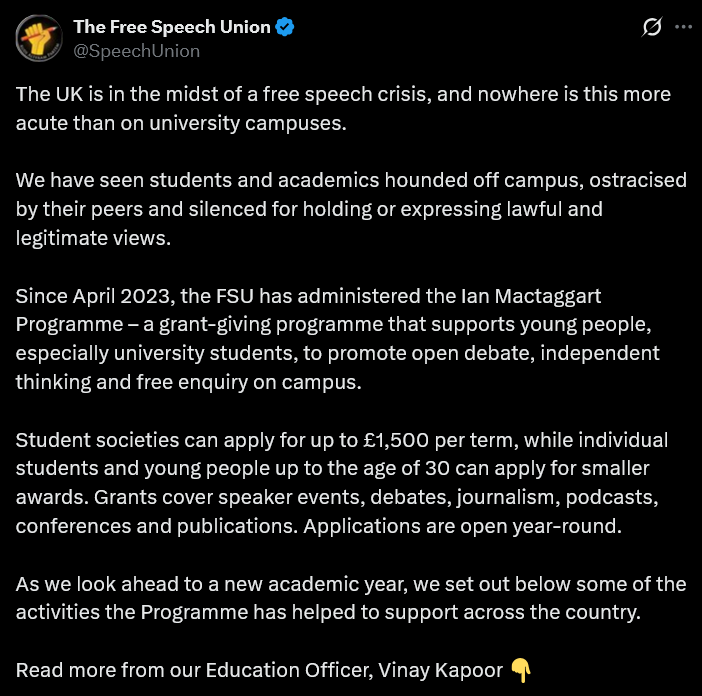
Finally, the Free Speech Union highlights its Ian Mactaggart Programme, which funds debates, speaker events, and student journalism for young Britons pushing back against a campus culture where students and academics get “hounded off campus” for holding lawful views. A modest bright spot in an otherwise grim UK free-speech picture.