A round-up of the latest and best insight on the rise of illiberalism in the public discourse:
John Coleman: By bullying Anthropic, the Pentagon is violating the First Amendment. Here’s why.

Back in February, War Secretary Pete Hegseth reportedly gave Anthropic CEO Dario Amodei three days to open up its AI models for unrestricted Pentagon use or face blacklisting and a possible seizure under the Defense Production Act.
Anthropic refused, so Trump ordered federal agencies to drop the company and Hegseth barred military contractors from doing business with it, and the Department of War formally branded Anthropic a “supply chain risk.”
At FIRE, legislative counsel John Coleman argues this a free-speech issue: the company’s design choices as protected expression, no different from a printed pamphlet:
“No software is neutral when its makers are not.”
J.D. Tuccille: Surveillance Camera Saboteurs Are Getting Government Officials’ Attention
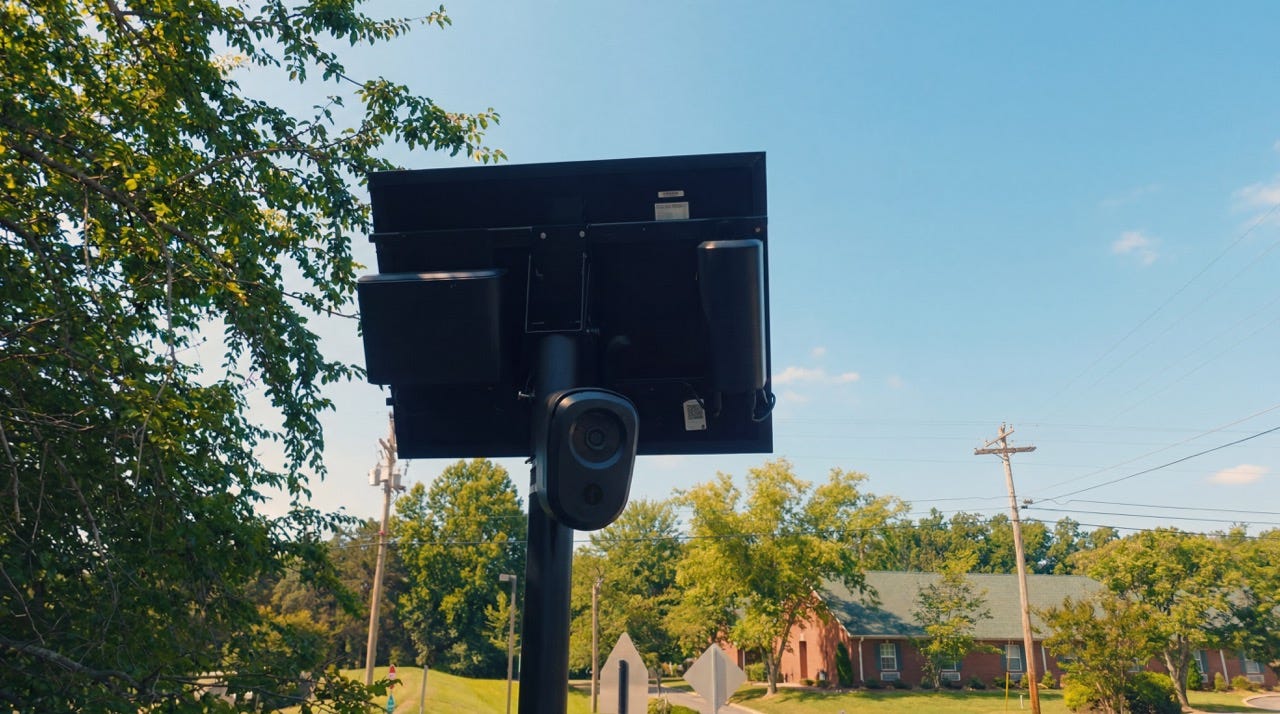
Automated license plate readers, “Flock cameras,” after the industry leader, scan every car that passes, feeding a nationwide database that police can query without a warrant. The Institute for Justice has documented well over 100 cases of abuse, from romantic stalking to wrongful detentions, plus plenty of outright misreads. Officials keep signing contracts anyway. So, increasingly, ordinary people are taking matters into their own hands.
“Subject to escalating snooping, some people respond by sabotaging surveillance cameras’ all-seeing eyes.”
At Reason, J.D. Tuccille catalogs the results: cameras shot, sawed down, foam-sealed, and spray-painted across at least 36 states. It’s vandalism, and people have been arrested for it, but it appears to be working. Pinal County’s sheriff cited Fourth Amendment concerns in canceling his office’s Flock contract, and DeFlock counts at least 135 communities that have rejected the technology outright. Years of privacy advocacy got an assist from a much blunter instrument: citizens with hacksaws and spray paint.
Silkie Carlo: Free speech under relentless attack in the UK
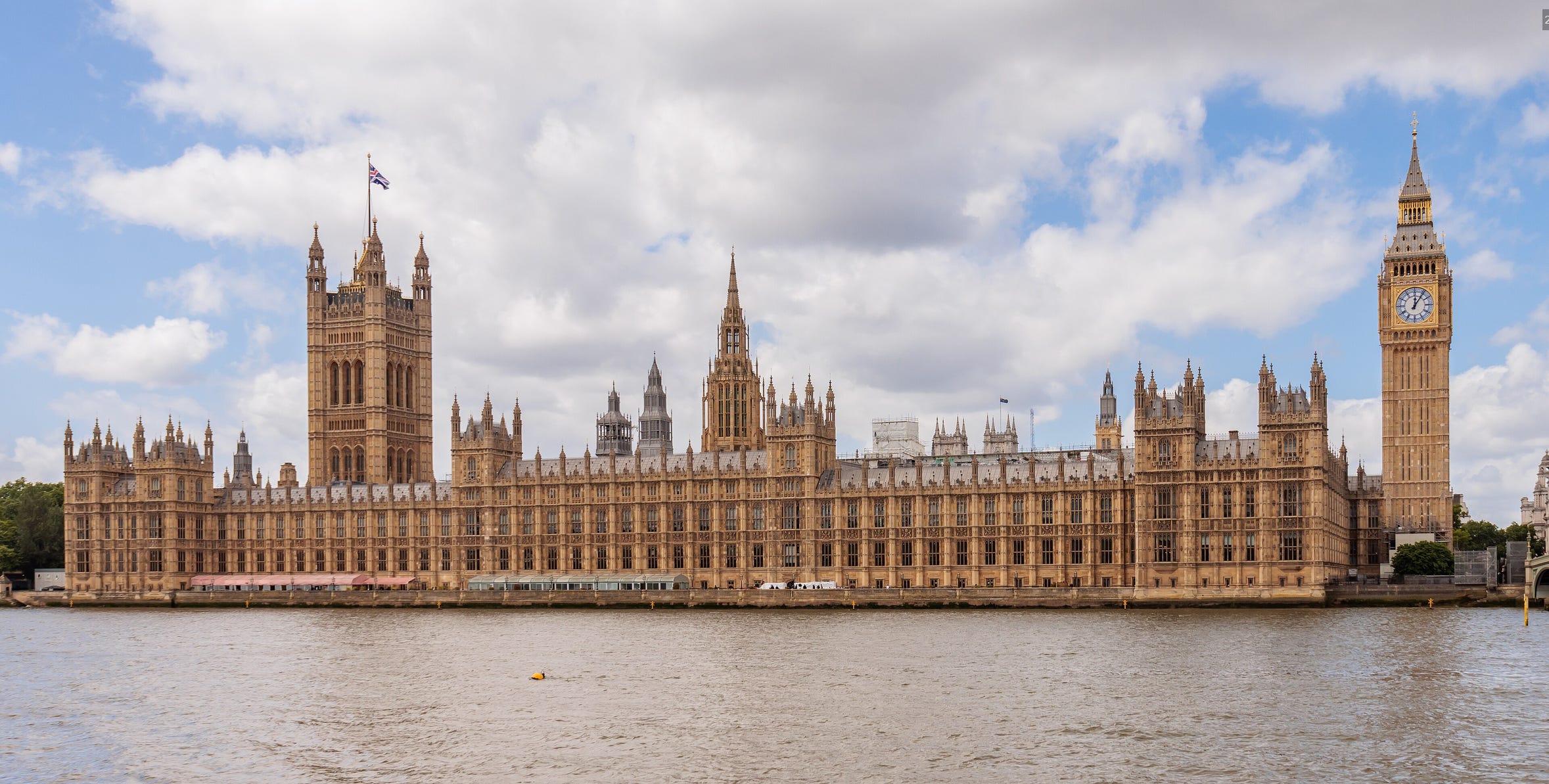
A new poll finds most Britons believe free speech deteriorated over Keir Starmer’s time as prime minister, and the numbers back up the public sentiment (Starmer has since been succeeded by Andy Burnham, who now inherits the problem).
“Police now arrest around 22 people a day for speech offences”
That’s compared to an estimated 16 for fraud. The piece walks through two arrests from the same day in May: a young couple handcuffed and held overnight for holding “F--- Islam, Christ is King” signs at a Tommy Robinson rally, and a 73-year-old in a Grim Reaper costume detained at a pro-Palestine protest over a face-covering technicality he’d already complied with.
Carlo’s sharper point is about tribalism: both the left and right have grown comfortable with these powers so long as they’re aimed at the other side, which is exactly how everyone ends up on the wrong end of them eventually.
Around X
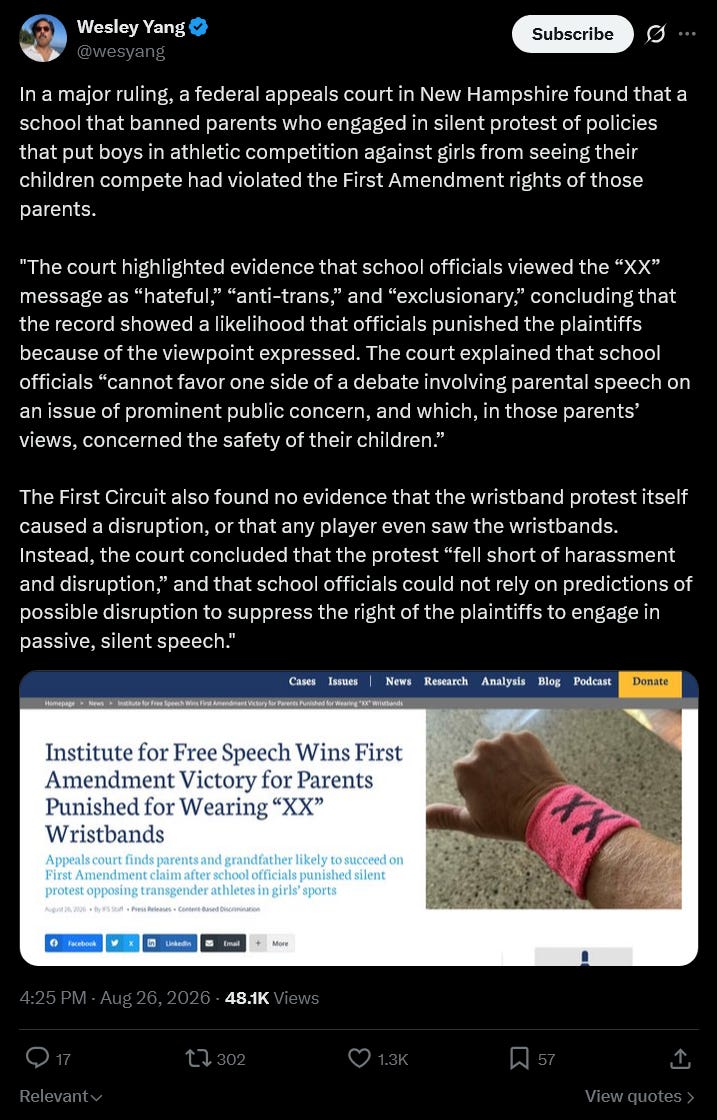
A federal appeals court in New Hampshire just ruled that a school violated the First Amendment rights of parents it banned for silently protesting. Their offense? Wearing pink “XX” wristbands to protest policies that let boys compete in girls’ sports.
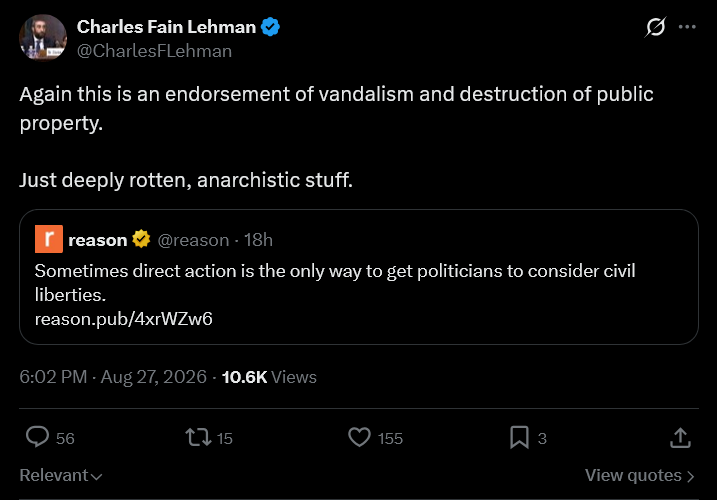
Reason’s own tweet promoting today’s camera-sabotage piece — “sometimes direct action is the only way to get politicians to consider civil liberties” — didn’t land well with everyone. Charles Fain Lehman called it an endorsement of vandalism and “deeply rotten, anarchistic stuff.”
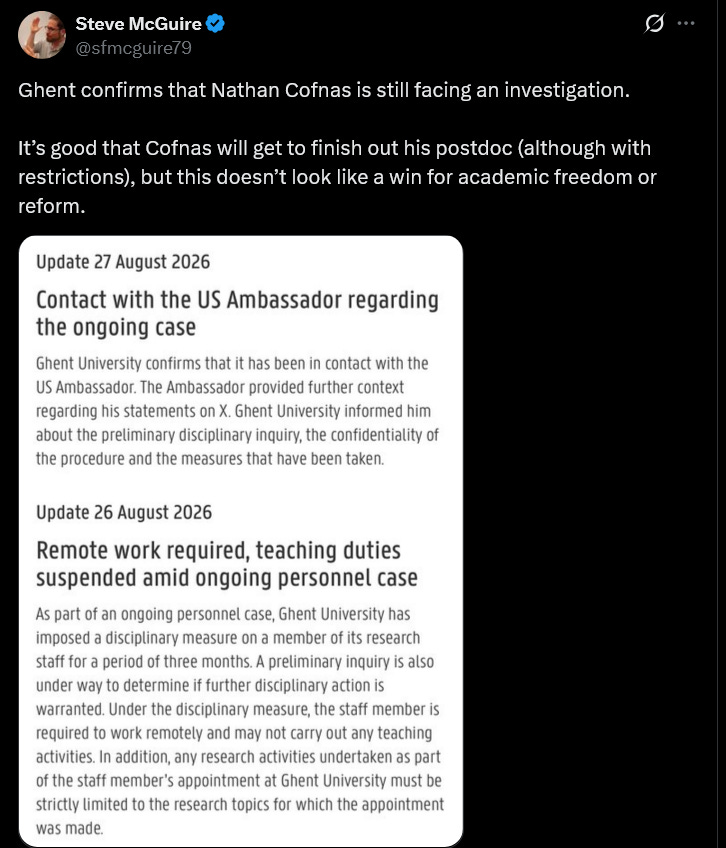
Finally, Ghent University has confirmed that Nathan Cofnas remains under investigation, with his teaching suspended and his research restricted for three months, even as the university lets him keep 60% of his postdoc appointment. Progress, of a sort, but not exactly a clean vindication for academic freedom.