A round-up of the latest and best insight on the rise of illiberalism in the public discourse:
Simon Tam: An Arizona business beat Jack Daniel’s. Free speech won too
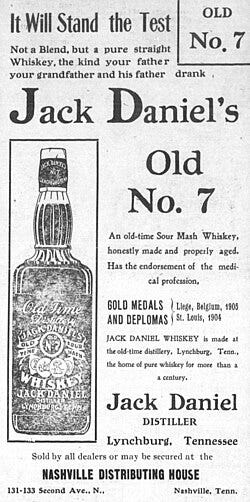
VIP Products, the Scottsdale company behind the “Bad Spaniels” squeaky dog toy, has spent twelve years and a trip to the Supreme Court fighting off Jack Daniel’s. On Aug. 4, the Ninth Circuit sided with VIP again, reversing a permanent injunction and clearing the toy — “Old No. 2 on Your Tennessee Carpet,” “43% Poo By Vol.” and all — to keep squeaking.
At The Republic, Simon Tam says the result is fine, but the legal theory behind it deserves more scrutiny than it’s getting:
An Arizona company called VIP Products has been fighting Jack Daniel’s over a squeaky dog toy since 2014. The toy is shaped like a whiskey bottle and labeled “Bad Spaniels,” with taglines including “Old No. 2 on Your Tennessee Carpet” and “43% POO BY VOL.” The case went to the Supreme Court and back, and on Aug. 4, the Ninth Circuit ruled in VIP’s favor again.
The outcome is reasonable. The doctrine that enabled the lawsuit is worth chewing on.
Jack Daniel’s wasn’t claiming consumers were confused about who made the toy. It was pursuing a different theory: trademark dilution by tarnishment, which allows famous brands to suppress expression that merely associates their image with something unflattering, even when no one is confused about the product’s source. The Ninth Circuit reversed the tarnishment finding because Jack Daniel’s expert established only a generic negative association between feces and consumable products — not that the specific marks at issue would actually suffer reputational harm. The court also held that parody can factor into whether tarnishment occurred, even if it doesn’t trigger the statutory exception the Supreme Court blocked in 2023.
Jay Weaver: Fired federal prosecutor sues DOJ over old blog posts critical of Trump
Will Rosenzweig spent five years as a well-regarded federal prosecutor in Miami, days away from trying a multimillion-dollar Medicare fraud case, when a conservative commentator dug up a blog he’d written years earlier — mostly about college basketball and travel, occasionally critical of Trump — and demanded he be fired.
Attorney General Pam Bondi obliged within three hours, by email, while Rosenzweig was observing Rosh Hashanah. He’s now suing the Justice Department, per the Miami Herald, arguing the firing punished him for constitutionally protected speech made years before he ever worked for the government:
A former federal prosecutor who was fired because he had made critical blog posts about Donald Trump during his first term as president has sued the top U.S. law-enforcement officials in the nation and South Florida, saying in a lawsuit filed Friday they violated his free-speech rights when he was summarily terminated last year.
Will Rosenzweig, 40, was fired by then-U.S. Attorney General Pam Bondi last September after Trump supporters called for his firing in social-media posts after publicizing that the prosecutor had posted negative statements about the president when Rosenzweig was working as an attorney for a private law firm in Washington, D.C. — a few years before he was hired by the U.S. Attorney’s Office in Miami.
Bondi fired Rosenzweig by email without giving a reason on Sept. 23, 2025, while he was observing the Jewish New Year, Rosh Hashanah, with his family — just two weeks before he was to be the lead prosecutor in a multimillion-dollar healthcare-fraud trial.
Julia Burns: Mystery ‘Free Speech Zone’ sign sparks debate in Brooklyn
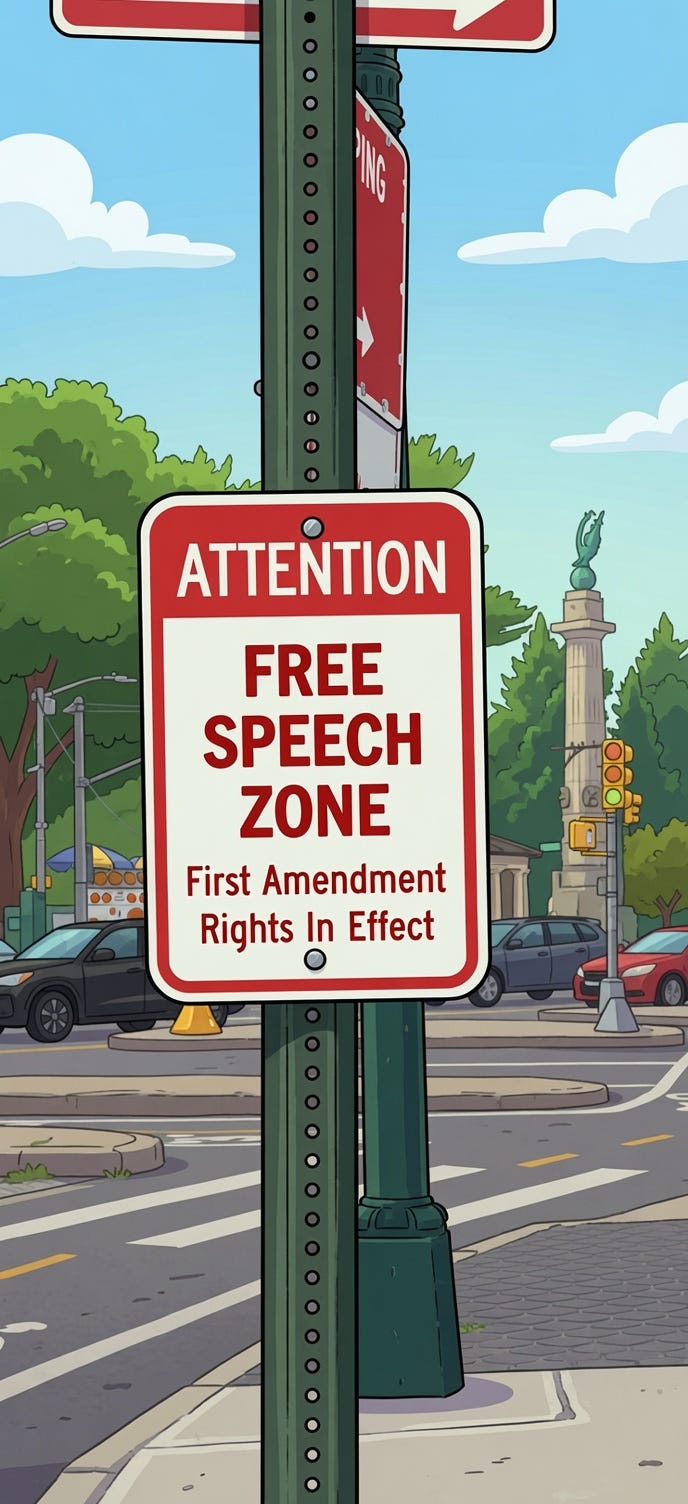
Someone in Grand Army Plaza installed a sign, styled to match the city’s own street signage right down to the font and color, reading “ATTENTION: Free speech zone, First Amendment Rights in Effect.” The NYC Department of Transportation says it isn’t theirs, and city sources tell News 12 it’s illegal signage that will likely come down.
The sign’s true origin is still unknown, but its short life says something on its own: a guerrilla reminder of a constitutional default apparently needed enough reminding that someone thought it was worth the risk of an illegal-signage citation to say it out loud. One resident put it well — the fact that a fake street sign about free speech got an entire neighborhood talking about free speech is, in its own small way, the whole point:
Anywhere in America should be a free speech zone, right?
Around X
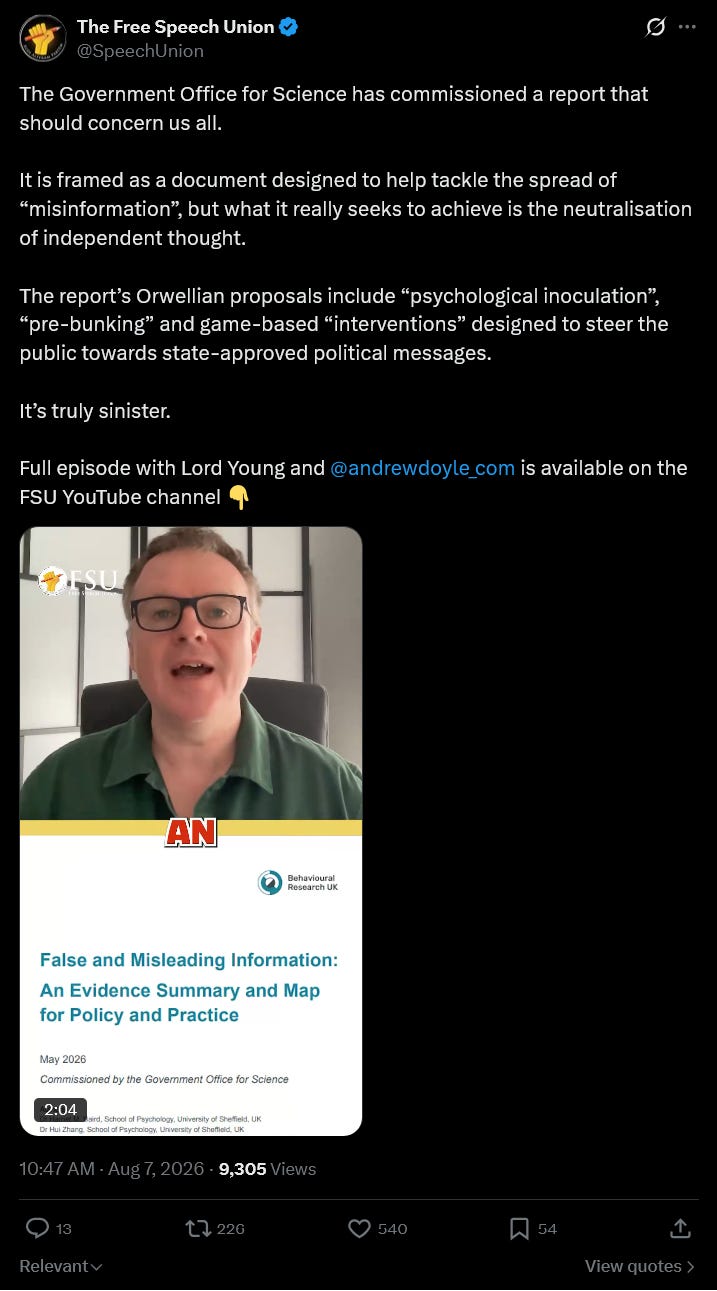
The UK’s Free Speech Union flags a Government Office for Science report that dresses up “misinformation” management in the language of “psychological inoculation” and “pre-bunking” — proposals FSU calls “truly sinister” for what they’d do to independent thought.
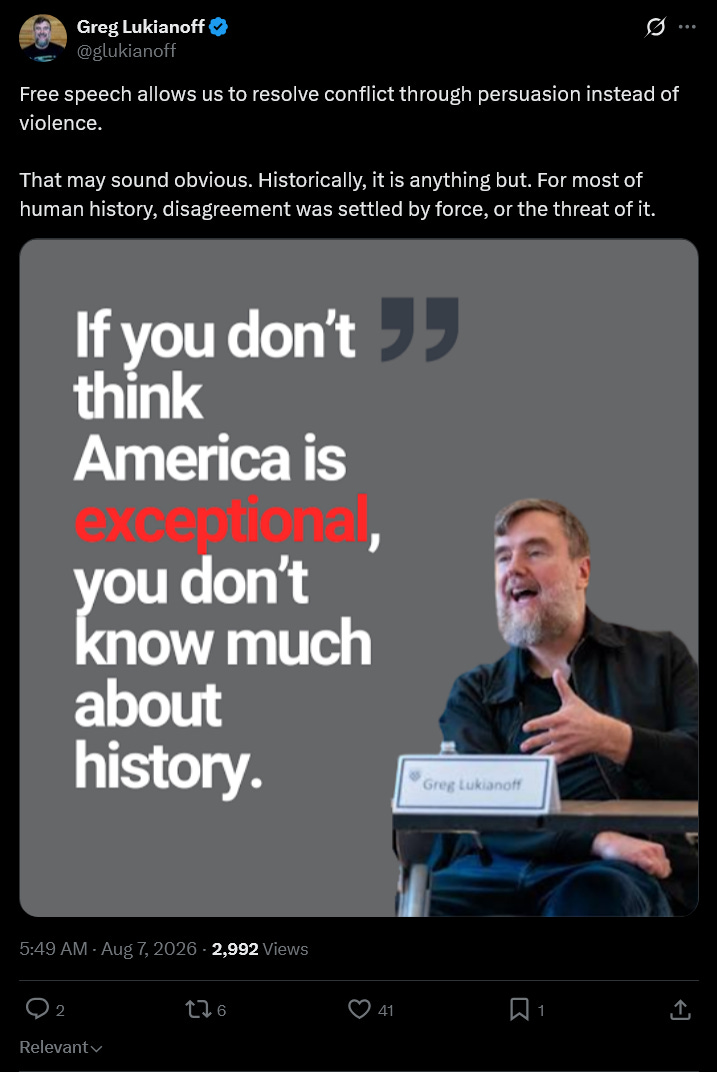
Greg Lukianoff argues that free speech is what lets us settle disagreement through persuasion instead of force. “If you don’t think America is exceptional,” he adds, “you don’t know much about history.”
Finally, The Free Press shares Dr. Karla Solheim’s account of her medical association silencing her views on gender-affirming treatment, arguing that when authorities insist ordinary people are wrong about something they can plainly see, it’s the authorities’ credibility that suffers, not the public’s judgment.