A round-up of the latest and best insight on the rise of illiberalism in the public discourse:
FIRE: The Alex Pretti shooting and the growing strain on the First Amendment
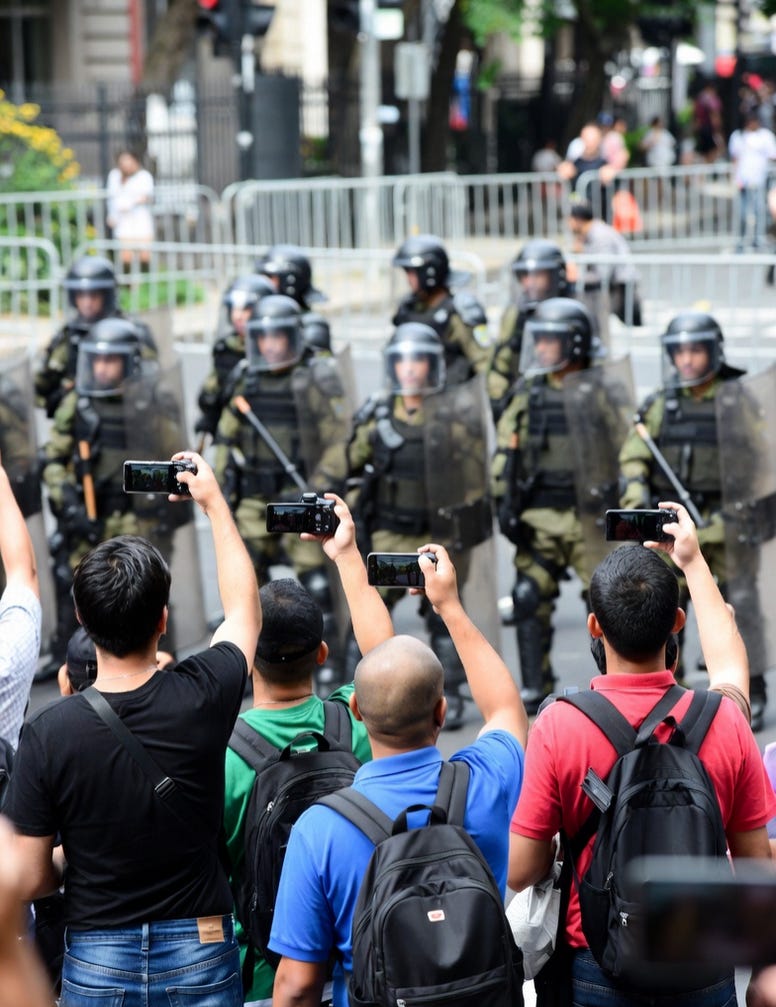
The recent anti-ICE protests in Minnesota have reignited debate about the legality of filming law enforcement. The Foundation for Individual Rights and Expression (FIRE) reminds everyone that Americans absolutely can—and arguably should—record the police to prevent and document abuses of authority:
Every federal appeals court to address the issue has recognized a First Amendment right to record government officials like police officers engaged in their duties in public spaces through filming, photographing, and audio recording, subject only to reasonable time, place, and manner restrictions. That is, if you are lawfully present in a public space, the police cannot interfere with your recording solely because you are recording. Rather, there must be a legitimate law enforcement need to do so, like maintaining public and/or officer safety or protecting the integrity of an investigation. Any way in which police interfere with you recording them must actually address that need and leave open reasonable alternatives for documenting the events.
For instance, under the First Amendment, an officer cannot order you to stop livestreaming the arrest of a protester in a public park, but can order you to move to a different location if you are in the way of the officer(s) making the arrest. Similarly, an officer cannot stop you from filming a traffic stop, but can stop you from doing so in the middle of a busy street. In contrast, an officer can likely order you to stop recording a conversation with a confidential informant where that could compromise an ongoing investigation and/or put a life at stake.
In addition to First Amendment protection, some states, like Colorado, Hawai’i, Illinois, and New York, independently protect the right to record public police activity in their state constitutions or statutes.
Although an officer cannot lawfully arrest you for merely recording them or failing to comply with an unjustified order to stop recording them, not all officers follow the law. You may need to weigh the personal risks of being unlawfully arrested (and, potentially, having to defend charges) against the value of continuing to record.
Autumn Billings: Leaked ICE Memo Claims Agents Can Enter Homes Without Judicial Warrants
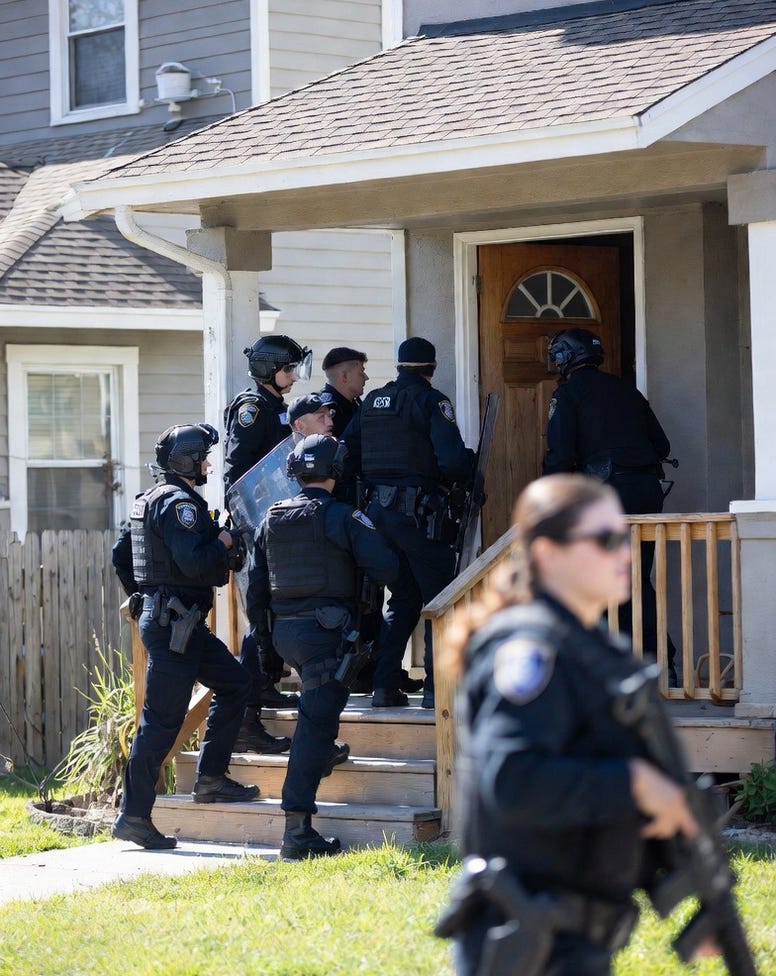
Apparently, Immigration and Customs Enforcement (ICE) believes its officers can enter someone’s home without consent. Autumn Billings reports for reason, outlining why the agency’s policy is flatly unconstitutional:
Whistleblowers have shared an internal Immigration and Customs Enforcement (ICE) memo with Sen. Richard Blumenthal (D–Conn.). The document claims that ICE officers may enter homes without consent while conducting certain immigration arrests without a judicial warrant. This sweeping power would be an alarming violation of Americans’ well-founded constitutional right to be free from unreasonable searches and seizures.
Signed by acting ICE Director Todd Lyons in May of last year, the memo states that agents may rely on a certain administrative warrant issued alongside a final order of removal to use “a necessary and reasonable” amount of force to the named individual’s residence if officers are denied entry.
The memo concedes that “historically,” these administrative warrants alone have not been used to arrest immigrants in their homes without first obtaining consent to enter. But the Office of General Counsel at the Department of Homeland Security (DHS) has apparently decided that such action is permissible when a Form I-205, a kind of administrative warrant of removal/deportation, is “supported by a final order of removal issued by an immigration judge…because that order establishes probable cause.”
The whistleblowers say that physical copies of the guidance weren’t circulated widely. But its contents, they report, were used to train recruits amid ICE’s push to hire 10,000 agents last year. Although written 2025 training materials clearly state “a warrant of removal/deportation does NOT alone authorize a 4th amendment search of any kind,” the whistleblowers say that instructors at the DHS Federal Law Enforcement Training Center “are directed to verbally train all new ICE agents to follow this policy while disregarding written course material instructing the opposite.”
Martin Evans: Police federation boss wrongly sacked after speaking to Telegraph, court finds
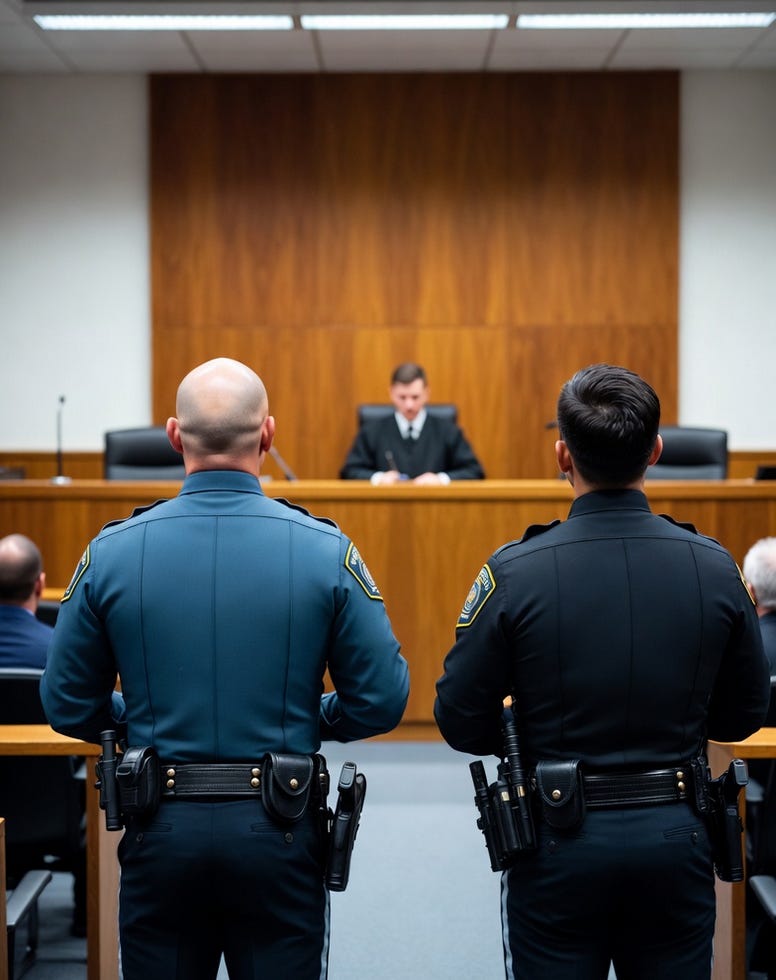
Last year, two UK law enforcement officers were suspended after publicly discussing racial tensions and policing. The country’s High Court just ruled that both suspensions were unlawful, violating the officials’ freedom of expression. The Telegraph has the story:
The former head of the Metropolitan Police Federation, who was sacked after giving an interview to The Telegraph, was unlawfully treated, the High Court has ruled.
Rick Prior was suspended in October 2024 after warning that his members were increasingly nervous about challenging people from some ethnic minorities for fear of being labelled racist.
He was then sacked for comments he made in The Telegraph in which he complained about his treatment.
Richard Cooke was suspended from the West Midlands Police Federation after posting a comment online disputing suggestions that his force was “institutionally racist”.
The High Court has now ruled that the Police Federation of England and Wales (PFEW) – the statutory association for police staff – acted unfairly in its treatment of both officers.
The court found that both suspensions were unlawful and a breach of their Article 10 right to freedom of expression.
The judge stressed that as an elected representative, Mr Prior had the right to comment on matters of public interest such as race relations, policing standards and officer confidence.
Mr Prior was suspended after he gave a television interview warning that his members were increasingly worried about using force for fear of becoming the subject of a vexatious racism complaint.
Around X
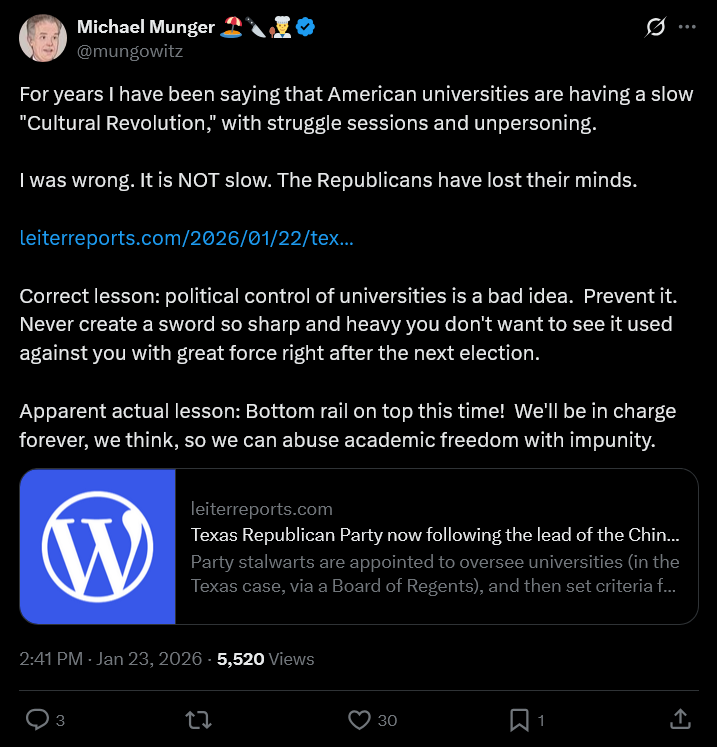
Michael Munger with a helpful warning about the dangers of politicizing universities.
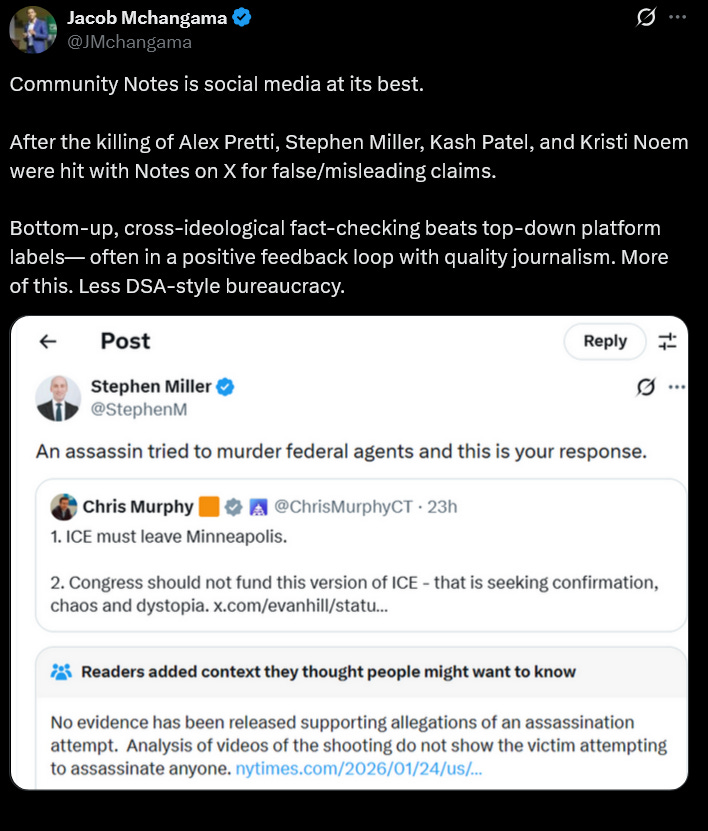
As it turns out, community-led fact checking beats top-down censorship. Color us shocked!
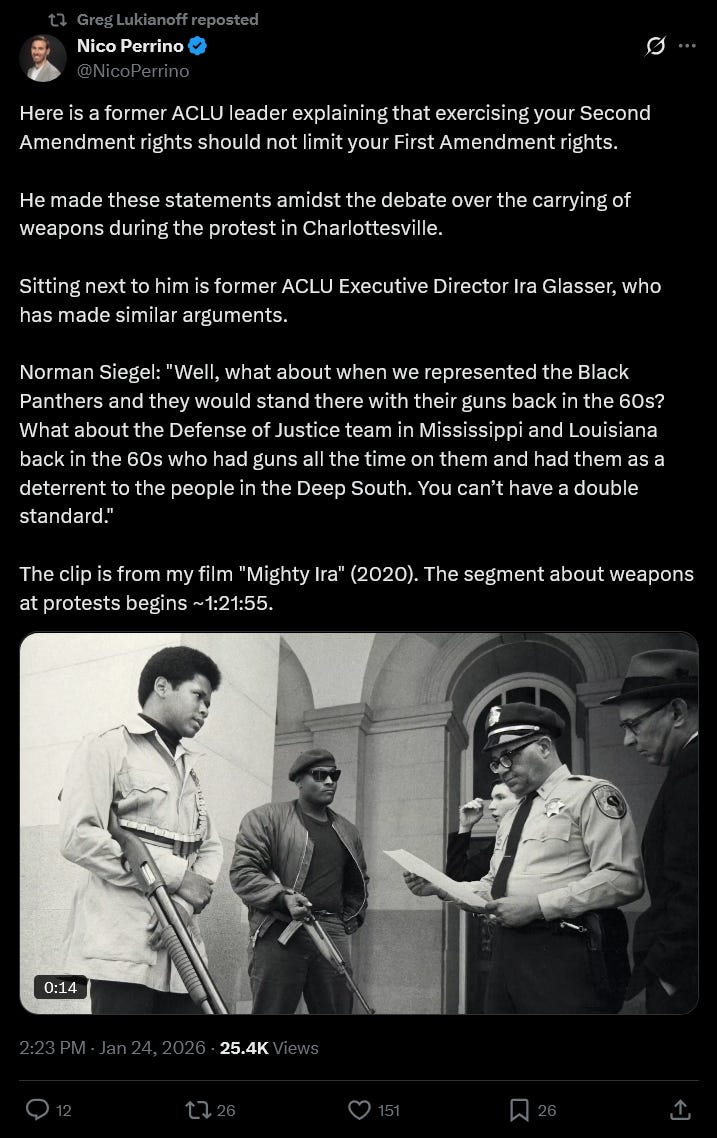
Contrary to what you may have heard, Americans can exercise their First and Second Amendment rights simultaneously, says Nico Perrino.