A round-up of the latest and best insight on the rise of illiberalism in the public discourse:
Liz Wolfe: Stop hating America

Two new polls landed this week showing that younger Americans have basically given up on loving their own country. Only 31 percent of 18-to-29-year-olds told NBC they’re “extremely” or “very” proud to be American, compared to 75 percent of seniors. PRRI found something similar: 34 percent of the youngest cohort feels proud to be American, versus 66 percent of those 65 and up.
At Reason, Liz Wolfe isn’t having it:
America is still a fundamentally good experiment—one still in progress, and one very much worth keeping. We can’t be cynical about everything, we’ve gotta pick some things to love.
…
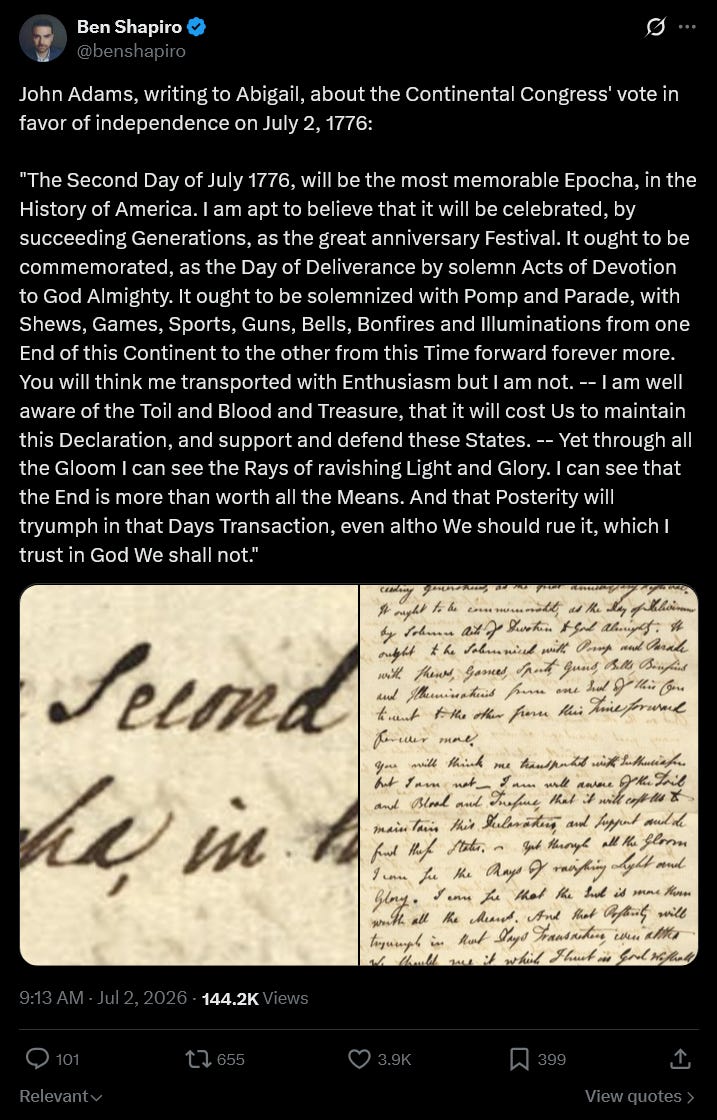
John Adams is dead, but Zoomers aren't yet, so there's still time to convince them of how much there is to love: American Flag cake and tech innovation and federalism and homesteading and Martha Stewart and the Beach Boys and the Fourth Amendment and going to space and Lana Del Rey and religious pluralism and Michael Jordan. But it's so much more than my silly little fixations: America is the land so many of our ancestors took a chance on and embraced great uncertainty to immigrate to.
It's the place where risk, coupled with work ethic, has historically been rewarded; where upward mobility seemed possible; where rising above your station—socially, economically, whatever—has been not just allowed, but encouraged, even for the fools and knaves among us. Life, liberty, and the pursuit of happiness, baby!
Benjamin M. Osborne: What would C.S. Lewis have thought of AI?
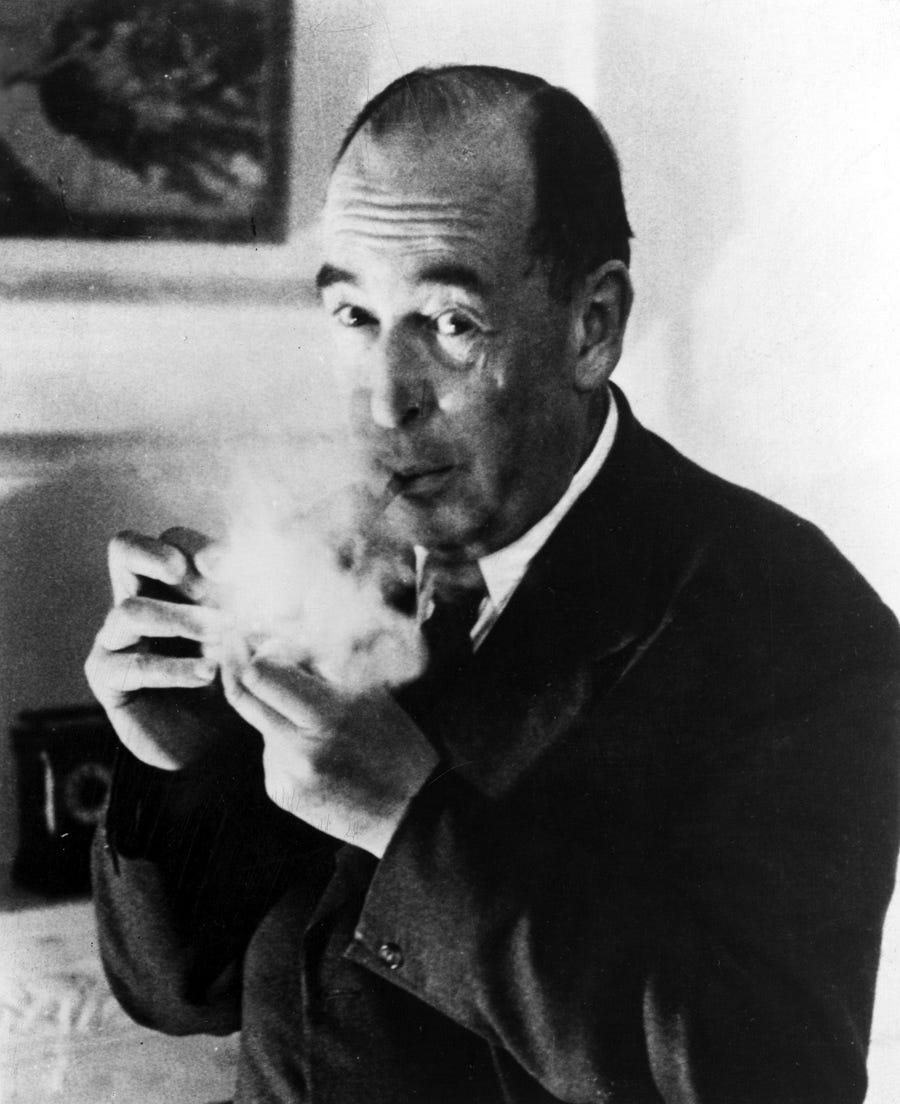
At Chronicles, Benjamin Osborne goes back to The Abolition of Man to figure out what Lewis — writing decades before the first chatbot — might say about our new machine oracles. His answer: Lewis would have started with the humans training the machine, not the machine itself, because “no software is neutral when its makers are not.”
The line worth sitting with is Osborne’s warning about what happens when AI is built by people who’ve already decided that words themselves are dangerous: “A tool trained by people who think speech is harm will teach others to fear plain speech.”
That’s the real abolition of man in the AI age, Osborne argues — not robots replacing human judgment, but a generation of chatbots quietly absorbing the premise that disagreement is a form of injury:
A tool trained by people who think speech is harm will teach others to fear plain speech. A tool trained by people who hate limits will teach others to hate limits. A tool trained by people who think man is only a bundle of wants will answer as if man were no more than that. No software is neutral when its makers are not.
George Orwell helped us see what is coming. In “Politics and the English Language,” Orwell wrote that bad public speech is not just clumsy. It is dishonest. It piles up long words, stale phrases, and soft names until the facts disappear. The words do not defend the act; they rename it, doing what the Prophet Isaiah condemned: calling evil good and good evil, so the honest argument never has to happen.
Orwell called this inflated style a kind of euphemism. It falls on the facts like snow. It blurs the outline. It covers the blood. The great enemy of clear language, he said, is insincerity. When a man’s real aim differs from his declared aim, he reaches for cloudy words. He does not say what he means because he does not want others to see what he means.
AI can make that habit effortless for those who want to practice it. It can turn a lie into a memo, a threat into a policy, a command into a recommendation, and a sin into a service. It can help the coward sound kind and the tyrant sound calm. It can give every evasion a pleasant voice.
The Federalist: FCC chair vows to crack down on anti-conservative media’s “free monopoly”
FCC Chairman Brendan Carr has a message for the legacy broadcast networks: the era of unaccountable coverage is over. As the agency investigates Disney-owned ABC over alleged discriminatory hiring practices and pokes at whether The View even qualifies as a “bona fide news program,” Carr is leaning hard on the FCC’s dormant equal-opportunities authority under the Communications Act of 1934.
Carr’s pitch isn’t subtle. Asked about accusations that the Trump-era FCC is weaponizing its power against the press, he turned the question around on his critics: “The legacy media has really done this to itself.”
“I think it’s good for them to want to correct course and earn a little trust back,” Carr said of the FCC’s renewed focus on the “statutory equal opportunities requirement” in the Communications Act of 1934. Equal Time, as the act’s Section 315 is commonly known, stipulates that a broadcast program that hosts a political candidate also must provide equal access to the office seeker’s opponent to appear on the show or in another commensurate capacity.
The section was amended in 1959 when Congress passed limited exemptions to the equal time requirement for content deemed “bona fide” news — interviews, newscasts, and documentaries. The idea was to spur news coverage of political campaign activity in the early days of broadcast television. Congress gave the FCC discretion to determine the scope of each exemption, according to the agency’s guidance issued in January, putting broadcast stations on notice and sending shockwaves through the industry.
‘A Thumb on the Scale’
As the guidance states, Congress’ inclusion of “bona fide” in the exemption categories reflects congressional concern that “broadcast stations would apply the exemptions too broadly in service of a political agenda and thereby frustrate the original purpose of the equal opportunities requirement to maximize broadcast coverage of political events.” “The idea was pro-speech. It was about more debate, more discussion, more candidates, let’s empower people,” Carr said. “What Congress didn’t want was for broadcasters to put a thumb on the scale for one political candidate for one partisan political party.”
Around X
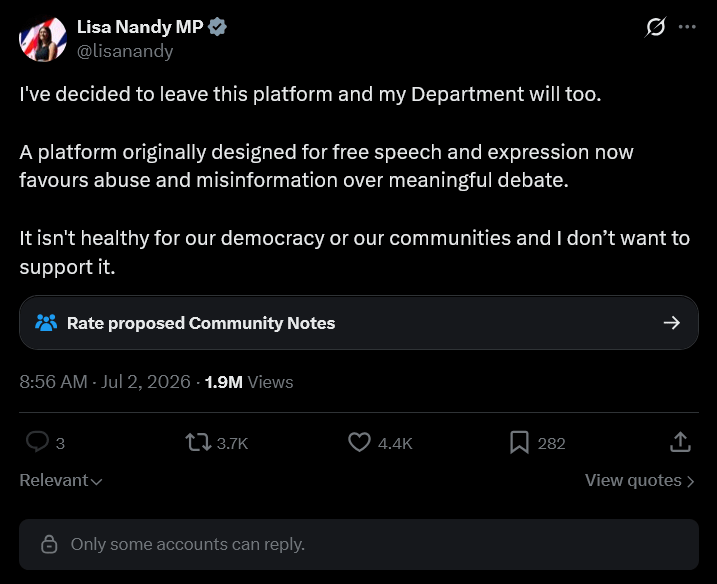
UK Culture Secretary Lisa Nandy just announced she’s quitting X, taking her entire government department with her, on the grounds that a platform “originally designed for free speech and expression” now “favours abuse and misinformation over meaningful debate.”
A sitting cabinet minister walking away from the public square because it’s too open is a perfect coda to today’s Lewis piece.
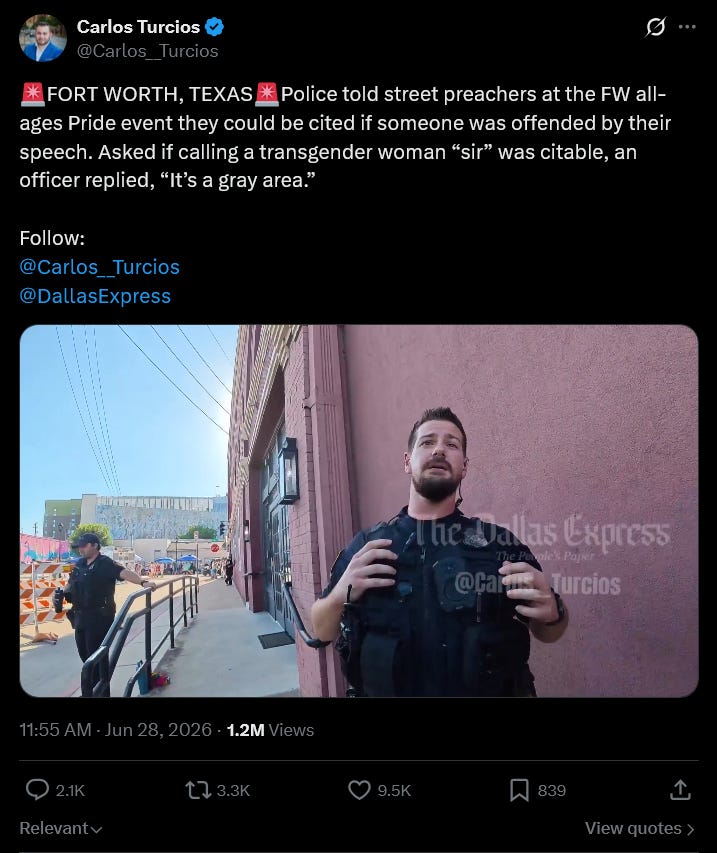
Meanwhile in Fort Worth, Carlos Turcios reports that police at an all-ages Pride event warned street preachers they could be cited if their speech offended someone — and that calling a transgender woman “sir” was, in an officer’s words, a “gray area.”
Finally, Ben Shapiro shares a powerful statement from John Adams, issued just before America declared independence in 1776. Happy 4th of July, everyone.