A round-up of the latest and best insight on the rise of illiberalism in the public discourse:
Joe Saunders: Total Fraud: Adam Schiff Demands AI Political Parodies Be Banned, Forgets He Lied About Trump and Called It Parody in 2019
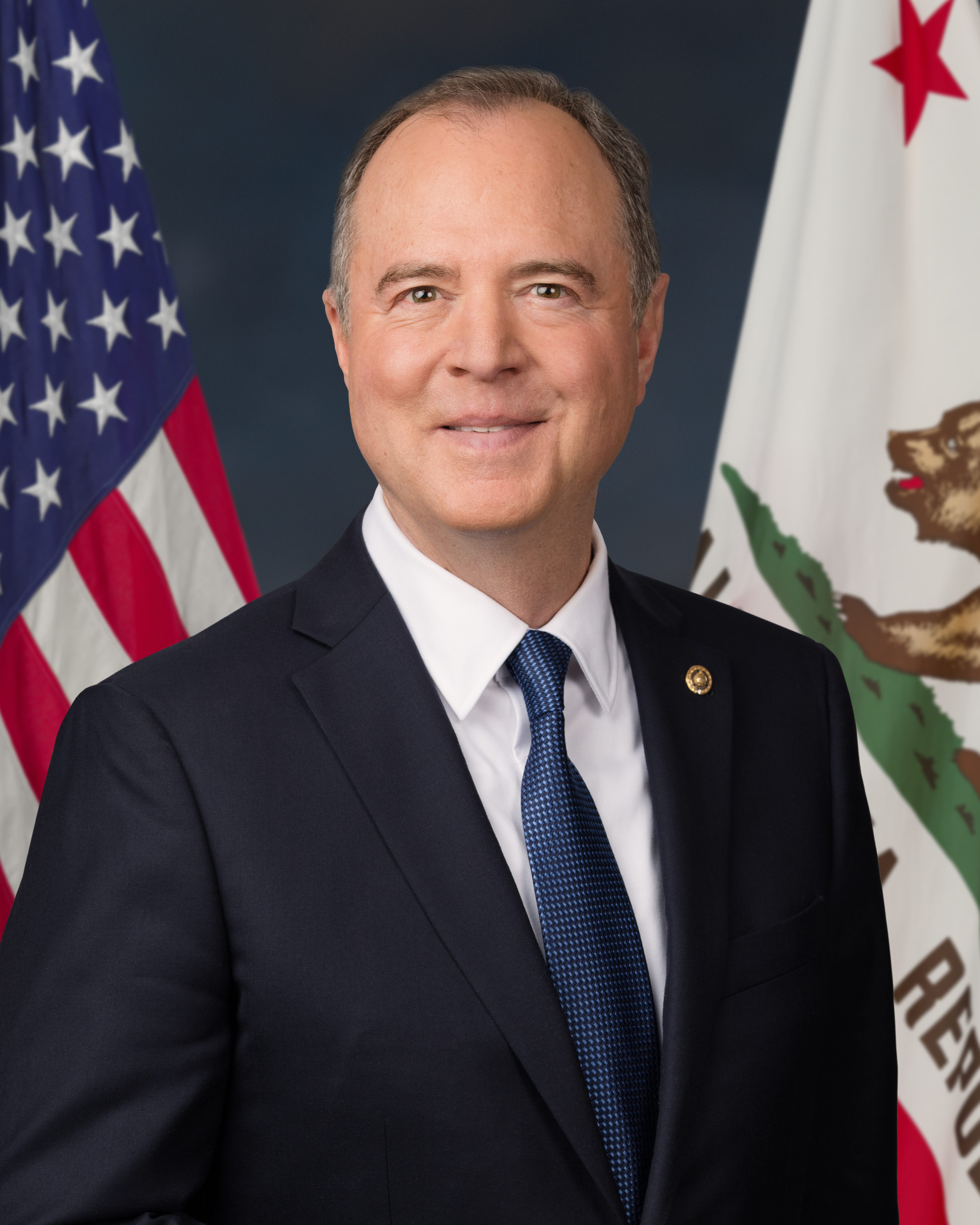
California Sen. Adam Schiff has unveiled two bills to police political speech in campaigns, including one that would extend an existing ban on candidate impersonation to AI-generated content.
The push follows a Los Angeles mayoral primary in which longshot candidate Spencer Pratt leaned on AI-generated attack videos against incumbent Karen Bass, and Tom Steyer’s paid use of social-media influencers in his failed gubernatorial run.
At The Western Journal, Joe Saunders isn’t buying the sudden concern for honesty:
Adam Schiff wants to ban AI parodies of political candidates. The irony runs deep.
Recall that when Schiff impeached President Donald Trump in 2019, he made up a fake version of Trump’s phone call with Ukraine’s President Volodymr Zelensky.
When Republicans complained that Schiff had misrepresented the actual conversation, which was the core of his charge against Trump, Schiff claimed it was just a “parody.” No one was laughing — but that was his excuse.
Now Schiff is introducing a bill that would ban “misrepresentation through the use of content generated in whole or in part with the use of artificial intelligence” in political campaign ads.
Ashkhen Kazaryan and Jenna Leventoff: The FCC wants to be the speech police
The public comment period just closed on the FCC’s early review of eight ABC-owned stations — a review Chairman Brendan Carr opened the day after President Trump publicly called for ABC to fire Jimmy Kimmel. More than 153,000 filings poured in, and nearly all of them said the same thing: leave the stations alone.
Writing in the Washington Examiner, the authors — a free-speech lawyer and an ACLU policy counsel — point out that the agency once refused this very role, memorably declining to become “a self-appointed, free-roving arbiter of truth in journalism”:
The FCC has made its goal clear: It wants to retaliate against broadcasters with a different political bent by burying them in baseless regulatory enforcement. Such a move sends a warning to other media that they should walk the administration’s preferred line or else. This is precisely the kind of regulatory pressure the Supreme Court has said the government may not put on a private speaker. The FCC is not the speech police, and the First Amendment dictates that it must stay out of our nation’s newsrooms, no matter how much it agrees or disagrees with coverage.
The government can say whatever it wants about the press and can certainly complain when it thinks coverage is unfair or biased. What it cannot do is reach for its regulatory tools to punish coverage it doesn’t like, require the media to air the government’s preferred coverage, or even threaten that it will do so. None of us should want an agency to have the power to decide what we can see on TV because any administration can abuse that authority, whether it’s this administration or the next one.
Robby Soave: What Anthony Fauci’s Defenders (and Critics) Get Wrong
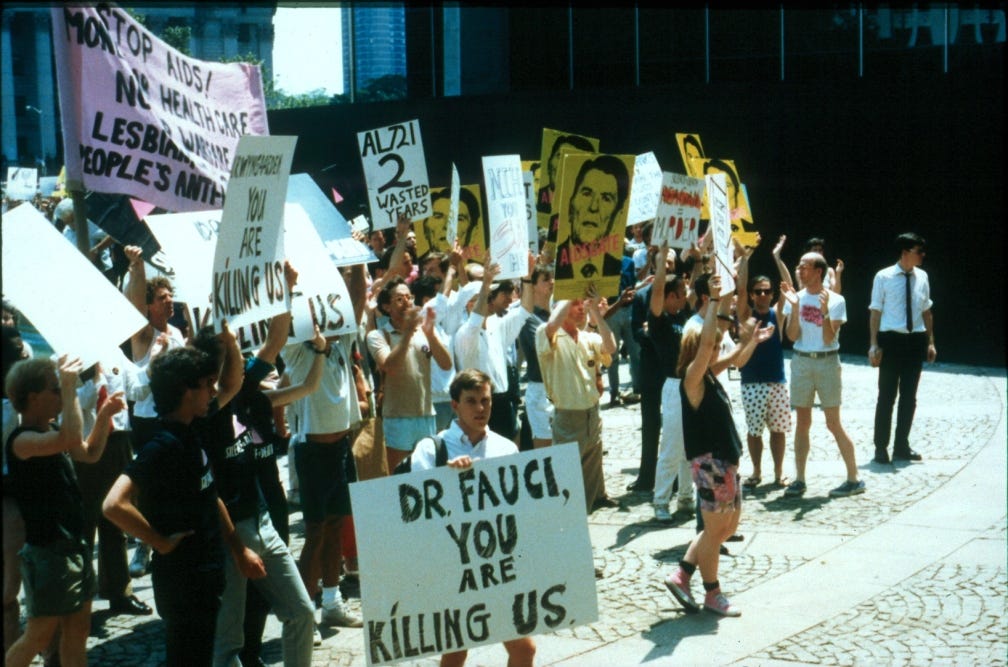
Anthony Fauci took the Fifth Amendment this week rather than answer Sen. Rand Paul’s questions about COVID-19’s origins, shortly after diary entries surfaced showing he’d privately described U.S.-funded Wuhan research as “gain-of-function” — the very thing he told Congress wasn’t happening. At Reason, Robby Soave argues the bigger scandal isn’t just the dishonesty. It’s what that dishonesty made possible.
Soave traces how Fauci steered expert opinion toward the animal-spillover theory even as most scientists he privately consulted had serious doubts, giving social platforms cover to treat the lab-leak theory as dangerous misinformation:
The public is owed answers to fundamental questions about the origins of COVID-19. Entries from Fauci’s diary—published by Paul earlier this week, in advance of the hearing—reveal not-so-subtle discrepancies between Fauci’s public and private statements regarding the theory that COVID-19 escaped from a lab. His diary also suggests that Fauci himself had described the U.S.-funded experiments conducted in Wuhan, China as “gain of function.”
This matters, since Fauci had previously testified before Congress that the U.S. did not fund gain-of-function research in Wuhan—a vital sticking point, since some scientists believe the molecular composition of COVID-19 looks like something cooked up in a lab.
In fact, Fauci solicited opinions from 12 other scientists as to the possibility of COVID-19 having originated as a result of U.S.-supported, gain-of-function experiments in Wuhan, China. In his diary, he notes that 10 of the 12 had serious concerns. Even so, Fauci steered the expert consensus toward an embrace of the animal spillover theory, which prompted mainstream media to demonize the lab leak theory.
At one point, it was common for social media companies to proactively police pro-lab leak posts on Facebook and other platforms—a policy that seems utterly insane from the standpoint of 2026. Fauci’s malfeasance helped bring about that act of censorship.
Around X
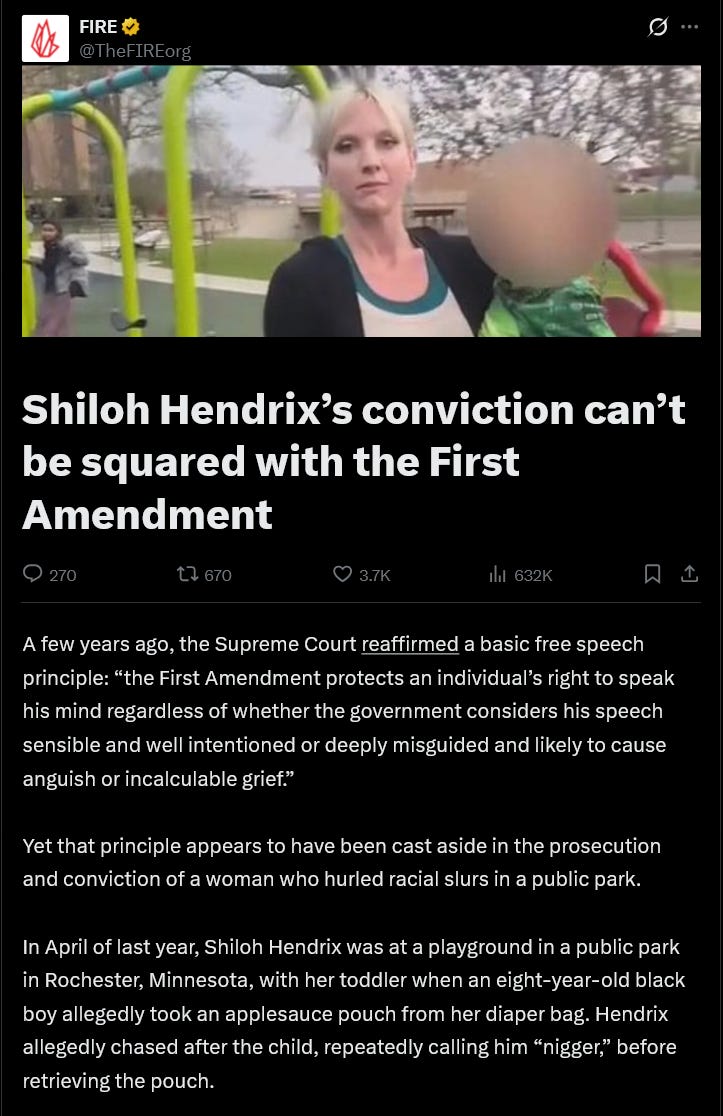
FIRE makes the free-speech case for an unsympathetic defendant: a Minnesota jury convicted Shiloh Hendrix of disorderly conduct for hurling a racial slur at a bystander who filmed her — a verdict FIRE argues can’t survive the First Amendment, since courts haven’t upheld a “fighting words” conviction in eighty years.
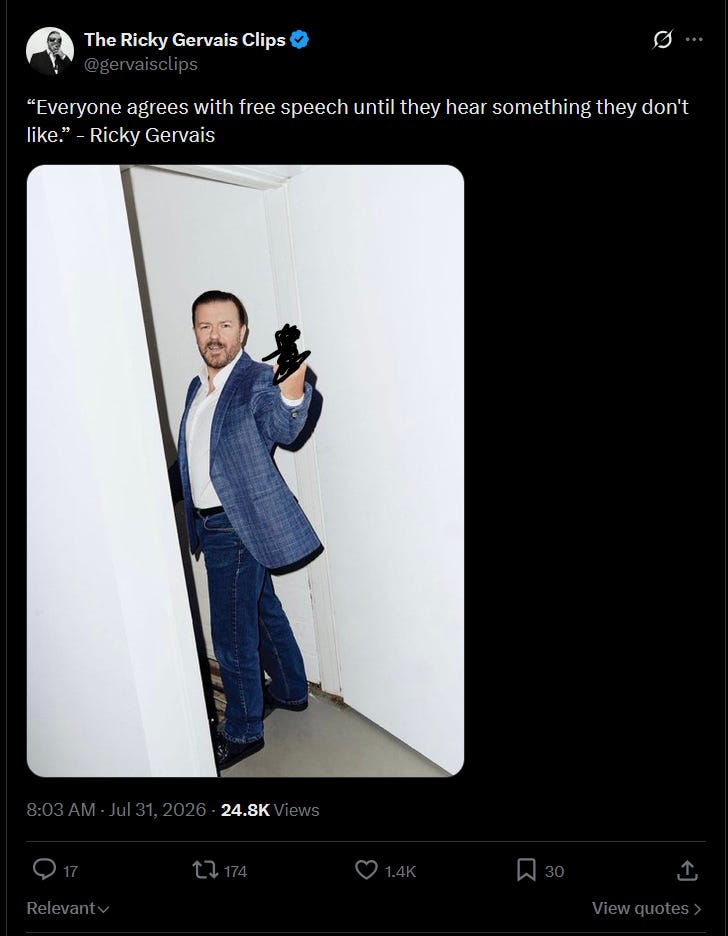
Ricky Gervais, no stranger to controversy himself, offers what might as well be this week’s thesis statement: everyone loves free speech, until they hear something they don’t like (tweet slightly edited for our younger readers’ sake).
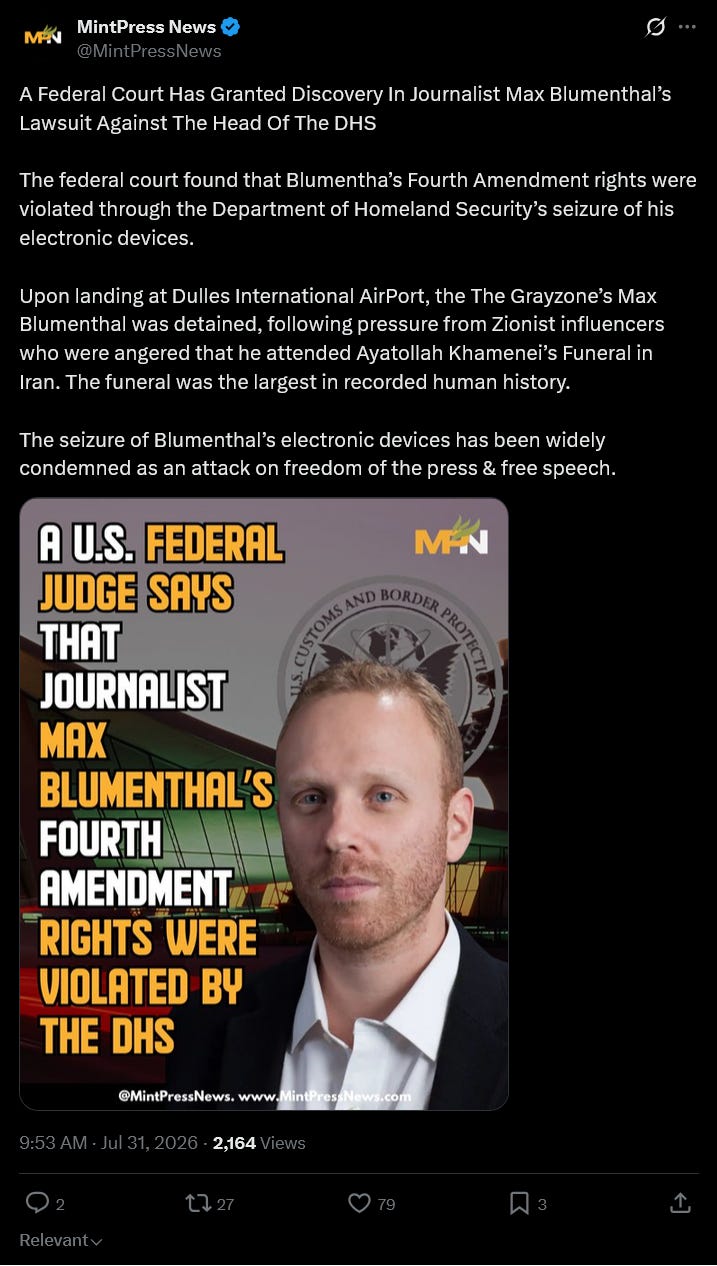
Meanwhile, MintPress News reports that a federal court has granted discovery in journalist Max Blumenthal’s Fourth Amendment lawsuit over DHS’s seizure of his devices, after he was detained at Dulles Airport returning from Ayatollah Khamenei’s funeral in Iran.