



A round-up of the latest and best insight on the rise of illiberalism in the public discourse:
Samantha Swenson: Professor appeals case alleging anti-white discrimination at Penn State
Former Penn State English professor Zack De Piero claims the school retaliated against him after he objected to mandatory diversity training, violating his First Amendment rights. A district court dismissed De Piero’s case in 2024, an “erroneous” decision his lawyer anticipates an appeals court will reverse. The College Fix reports:
Provost wanted ‘white faculty to “feel the pain” that George Floyd endured,’ lawsuit alleges
Oral arguments are scheduled for Thursday in Zack De Piero’s lawsuit against Pennsylvania State University, alleging the public institution subjected him to a racially hostile work environment and retaliated against him after he objected to diversity trainings.
De Piero, a former English professor at the public university’s Abington campus, filed the lawsuit in 2023. Mountain States Legal Foundation Senior Attorney James Kerwin, who is representing De Piero, told The College Fix the case is scheduled to be argued at the Third Circuit Court of Appeals this Thursday.
“We are confident the court of appeals will reverse the lower court’s erroneous decision and reinstate Professor De Piero’s lawsuit,” Kerwin said in a recent email.
A district court dismissed the professor’s case last year, ruling that De Piero did not present “sufficient evidence” to support his First Amendment claims. However, he and his attorneys appealed.
The appeal argues that the lower court erred by failing to properly recognize that Penn State’s alleged actions could constitute unlawful discrimination, retaliation, and violations of De Piero’s constitutional rights.
“Penn State created an environment rife with discrimination, and it violated the law,” Kerwin told The Fix.
Joseph Burgo: Why Traditional Psychotherapy Is Failing Today’s Gender-Confused Teens

We tend to think of speech restrictions as threats imposed on individuals by governments, but they have much broader consequences. In medicine, for instance, ideological constraints can prevent psychotherapists from speaking plainly, and thus treating their patients appropriately. Clinical psychologist Joseph Burgo lays out the details at Reality’s Last Stand:
Thanks in large part to Dr. Anna Hutchinson speaking and writing extensively about her experience at the Tavistock’s GIDS, we know how difficult if not impossible it can be to maintain and pursue an open-minded, questioning approach to trans-identified clients within an institute devoted to gender ideology. One remedy, she notes, is for psychologists to move into private practice to escape institutional environments that discourage traditional psychotherapeutic approaches.
Such a move might offer relief from institutes captured by gender ideology, but psychotherapists can’t escape a society saturated in the same belief system. Even solo practitioners today find it challenging to practice as we might once have done because the world around us disputes our authority as experts, undermines family structures that have traditionally supported our work, and replaces long-held understandings of human nature with newly minted and unevidenced theories presented as unassailable truth.
In other words, it’s difficult to practice traditional psychotherapy in a milieu so different from the social and scientific environment which gave birth to our ideas about human psychology and the drivers of psychopathology.
Autumn Billings: Prairieland Verdict: Texas Man Found Guilty of Transporting Constitutionally Protected Pamphlets
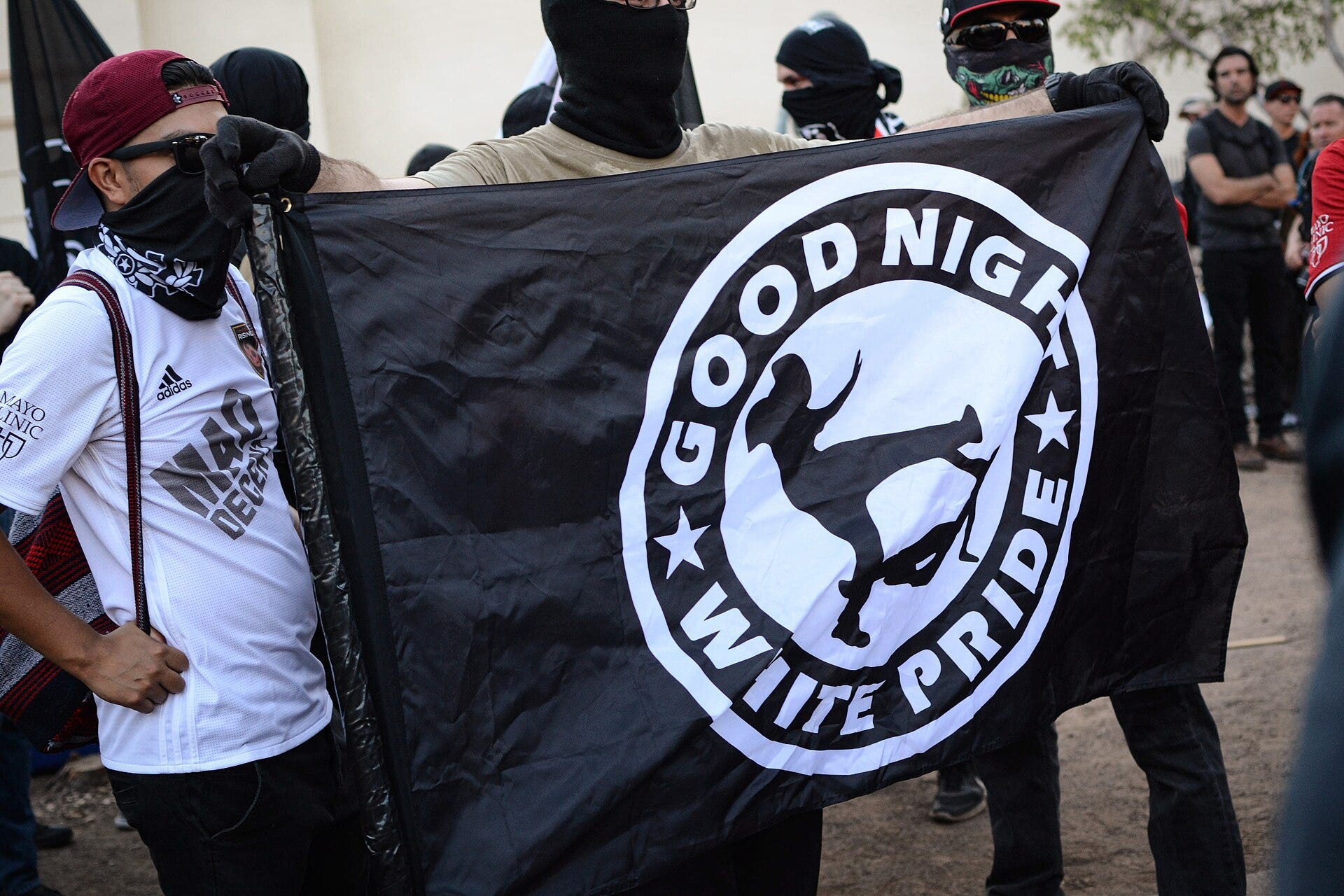
At Reason, Autumn Billings outlines the inherent risk in the government using anti-terrorism statutes to suppress rioting and related crimes. While acknowledging that violence isn’t protected speech, Billings says overzealous prosecutors sometimes abuse their authority and punish people whose only crime was speaking their minds:
A federal jury in Fort Worth, Texas, convicted eight protestors on charges ranging from rioting to attempted murder after a noise demonstration turned violent outside Immigration and Customs Enforcement’s (ICE) Prairieland Detention Center last summer. Federal prosecutors claim the group was part of an “Antifa Cell” and provided “material support to terrorists.” First Amendment legal scholars have raised serious concerns about the chilling effect these prosecutions and convictions will have on future political dissent.
One man’s conviction emphasized just how far that chilling effect could go. Daniel Rolando Sanchez-Estrada, the husband of one of the convicted protestors, wasn’t present at the time of the July 4 demonstration. After receiving a call from his wife, Maricela Rueda, from the Johnston County Jail, in which she told him to do “whatever you need to do” and “move whatever you need to move at the house,” officers began watching Sanchez-Estrada, according to the criminal complaint filed against him.
Shortly after, officers observed Sanchez-Estrada load and move a box from his home to another residence. Sanchez-Estrada was then arrested on state traffic offenses, and officers obtained a search warrant to locate and search the box. Inside, they found “numerous Antifa materials, such as insurrection planning, anti-law enforcement, anti-government, and anti-immigration enforcement documents,” according to a November indictment. Sanchez-Estrada was subsequently charged federally with corruptly concealing a document and conspiracy to conceal documents.
Sanchez-Estrada was convicted on both counts on March 13 and now faces up to 40 years in federal prison. But despite ICE proclaiming in a post on X that the contents of Sanchez-Estrada’s box contained “literal insurrectionist propaganda,” these controversial materials fall squarely under constitutionally protected speech.
Around X
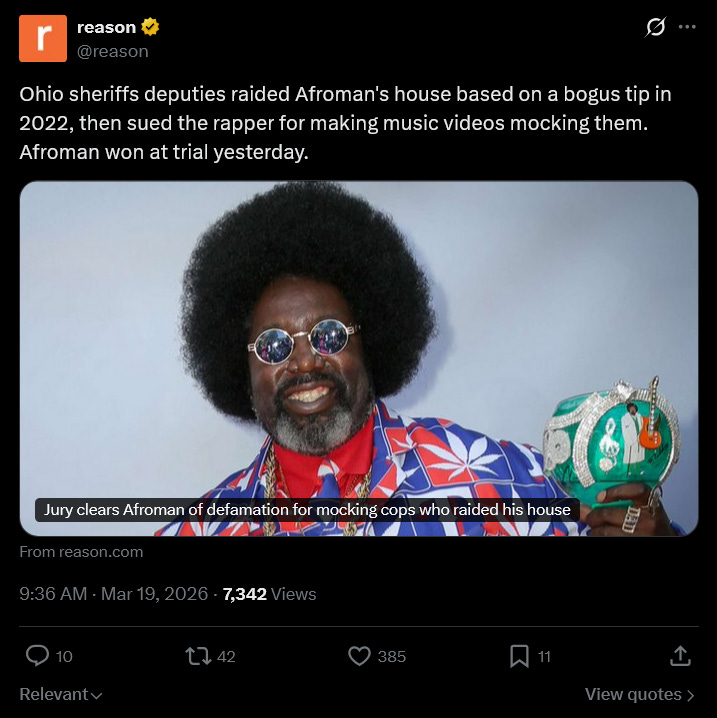
Rapper-turned-free-speech activist Afroman made headlines last week for beating defamation charges brought by Ohio sheriff’s deputies. Law enforcement executed a search warrant on his home in 2022, suspecting drug possession, drug trafficking and kidnapping.
Never charged with a crime, Afroman used footage from the raid for two music videos, which the deputies claimed contained false statements about them. The jury didn’t buy it: Afroman’s freedom of speech trumped any alleged defamation, they concluded:
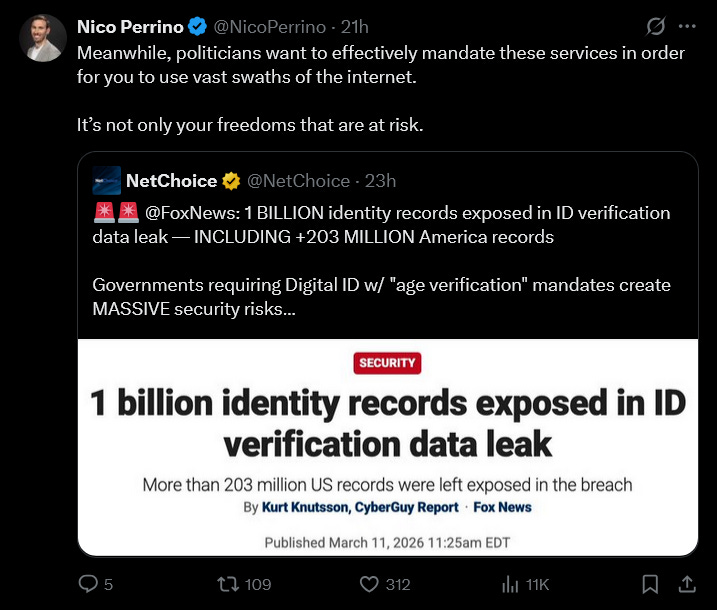
Reminder: The government always promises it has your best interest at heart as it further encroaches on your liberty. As Nico Perrino notes, that’s usually not the case.
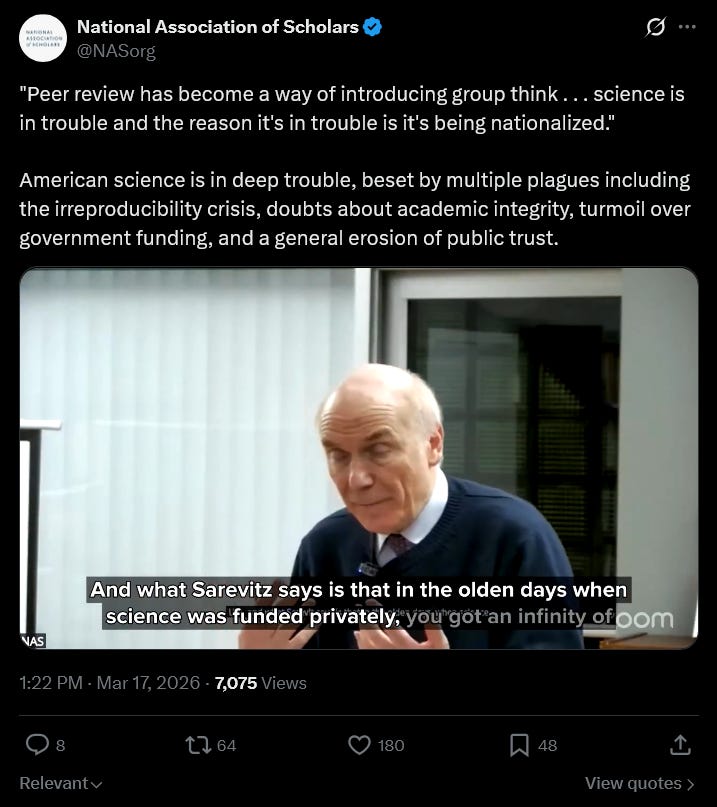
Censorship isn’t always enforced directly by government officials, but by proxies who benefit from public support. The textbook example? Academics whose research is funded by federal agencies. So says Cato Institute science policy expert Terence Kealey.
Same here!
https://unbekoming.substack.com/p/tyranny-without-fear
https://hxlibraries.substack.com/p/when-collegiality-becomes-censorship
https://x.com/LMucchielli/status/2032426999835148793