A round-up of the latest and best insight on the rise of illiberalism in the public discourse:
Thomas Hazlett: Ted Turner, Entrepreneur of His Age
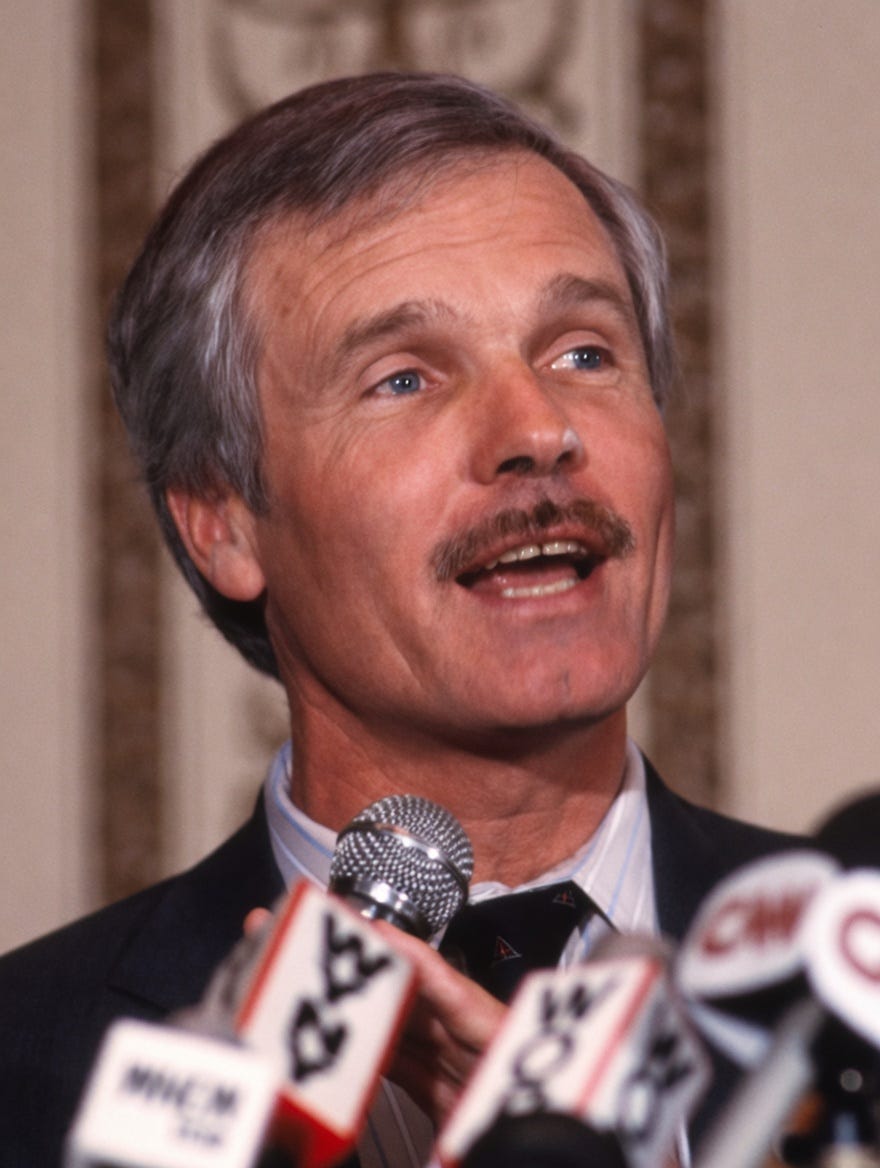
Ted Turner is best known as a cable TV mogul. But he should be remembered for another great accomplishment: demolishing “the tyranny of licensed, bureaucratic TV” and replacing it with consumer-driven content. That achievement had free-speech implications we’re still experiencing today. Thomas Hazlett reports for Reason:
The cartoon character he cultivated was for fun and to amortize the lithium load. His real role was Entrepreneur of His Age. Turner held the lead spear when the Late 20th Century Barbarians stormed the gates of the Old Order in American media. Meeting the moment at the perfect instant—when a “deregulation wave” was opening doors long shut—Turner flipped the script on “public interest” regulation concocted during the Progressive Era. Intellectuals largely bemoaned the passing of the administrative state, and the Cronkite audience it favored, devoid of controversy and offered as the “news from nowhere” (as a CBS executive bragged). But the closed-loop spoon feeding was inimical to freedom, open inquiry, and honest debate.
Even before he was finished, the creative destruction triggered by Ted Turner’s wild gambits had left the tyranny of licensed, bureaucratic TV in rubble. What came next may not always look pretty. But freedom of expression has a renewed life, as soon even the chatbots will discover.
…
Managing to salvage what was left of the family business, Ted bought a few backwater radio stations and then acquired WJRJ-TV in Atlanta in 1970—cheap because it was losing $50,000 a month. In 1972, Turner grabbed another UHF bargain, WRET-TV in Charlotte.
The Atlanta property, renamed WTBS (for “Turner Broadcasting System”), took off. In 1976 it became the first national channel, a “superstation” distributed by satellite to thousands of cable systems coast-to-coast. That virtually worthless UHF license was now the foundation of what would be a vast cable programming empire.
The Charlotte station had been an even hotter mess than the Atlanta money loser. Turner’s company board had risen up in opposition, blocking his planned purchase, so Turner mortgaged his personal residence and bought the station himself. The property then ballooned in value. In 1979 he sold it to Westinghouse for $20 million—the most recorded for any UHF station in history.
That sale gave Turner the capital to create CNN—America’s first true 24/7 cable news outlet—in 1980. What happened then was far more than the making of a mogul. It was the transformation of the world’s information flow.
Samuel Montgomery: Opera cancelled after single complaint over cultural insensitivity
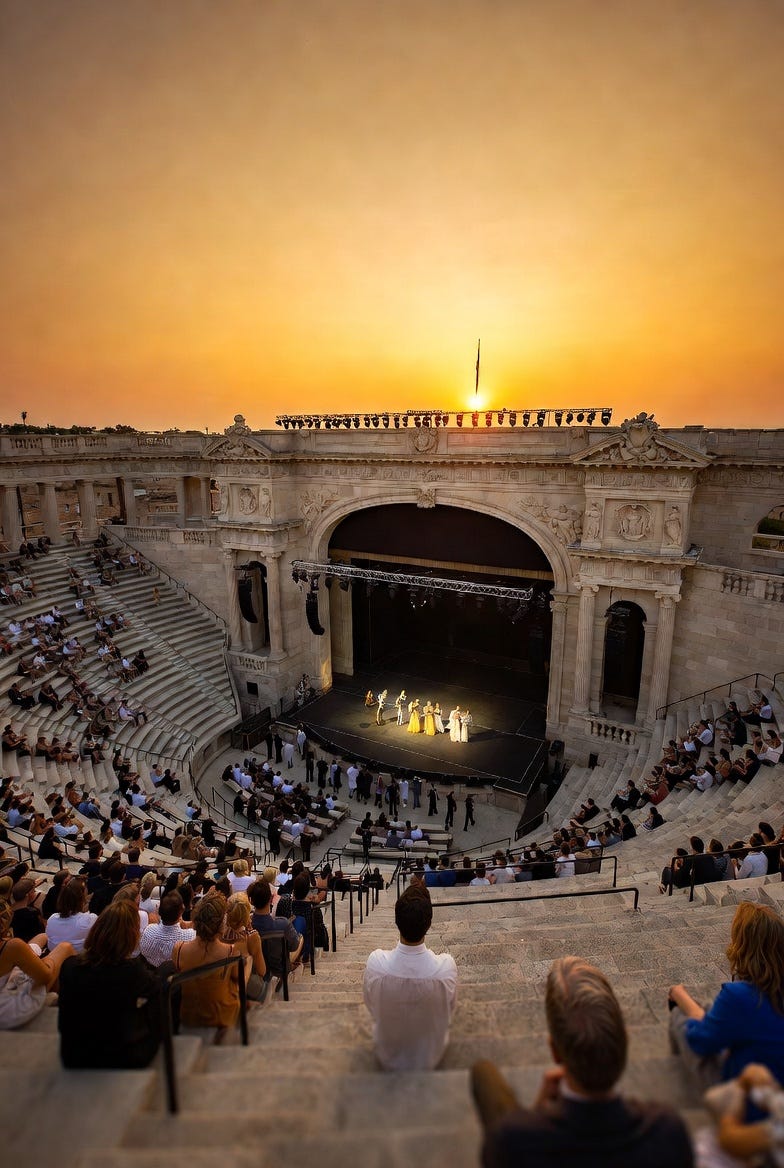
An open-air theater in the UK has cancelled a performance of a classic opera in response to exactly one complaint that it contained “colonial terminology,” and committed other culturally insensitive offenses. The Telegraph reports:
A Cornish open-air theatre has cancelled an opera after a single complaint about its colonial themes.
The Minack Theatre at Porthcurno pulled a planned production of Léo Delibes’s Lakmé after a US-based Hindu campaigner described the opera as “shallow exoticism based on prejudice”.
Rajan Zed, the president of the Universal Society of Hinduism, said it was “highly irresponsible” for the theatre to host Surrey Opera’s production given the perceived cultural sensitivities around the French opera.
“This deeply problematic opera was just a blatant belittling of a rich civilisation and exhibited 19th-century orientalist attitudes,” Mr Zed said, arguing that the theatre “should not be in the business of callously promoting appropriation of traditions, elements and concepts of ‘others’”.
…
A spokesman for the theatre said: “The opera contains two well-known arias, the Bell Song and the Flower Duet, which are frequently performed in classical concerts. However, it was composed in 1883 and reflects colonial and social attitudes prevalent in Europe at that time.
“Because of this we had concerns from the start about their choice and were in discussion with Surrey Opera about how they would address these issues in their production before Mr Zed contacted us. They have subsequently withdrawn the opera and Mr Zed has been informed of this.
“The Minack is an inclusive venue, welcoming people of all cultures and faiths. We do not condone racial or religious intolerance or misrepresentation in any form. We understand and accept Mr Zed’s valid concerns and are happy that we have been able to resolve this matter.”
John J. Miller: The New ‘Animal Farm’ Should’ve Worked Harder
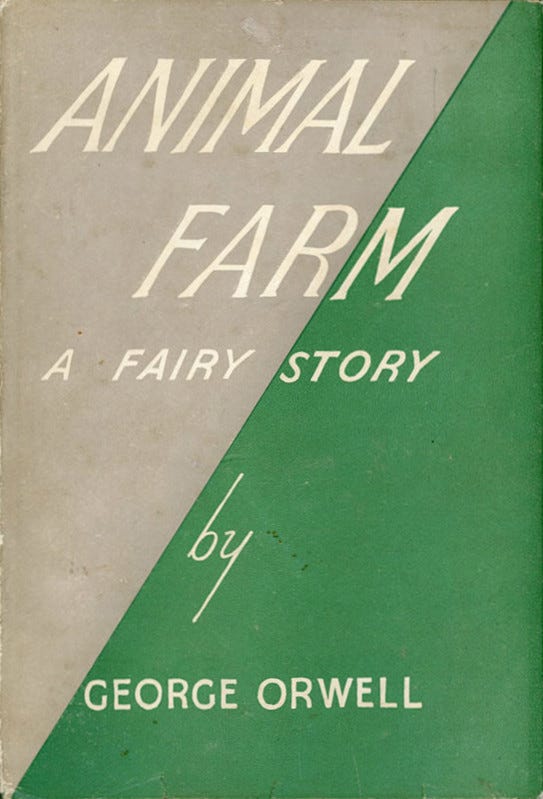
George Orwell’s 1945 novella Animal Farm is a blistering satire of soviet communism. Sadly, the 2026 film adaptation sloppily replaced Orwell’s entertaining if horrifying warning about Stalinist Russia with hackneyed partisanship and fart jokes. That’s according to John Miller at The Wall Street Journal:
It’s an amusing line in a bad movie: “We’re just following, we’re just following,” chant several sheep as they enter a semi-trailer that’s supposed to haul them to a slaughterhouse. They literally follow the herd in the opening minutes of “Animal Farm,” which arrived in theaters this past Friday. Only the heroics of other livestock save them.
Sadly, nothing can save the movie. It’s a bland mash of computer animation, didactic moralizing and fart jokes. Its worst mistake is to stray from its compelling source.
George Orwell’s “Animal Farm” is a modern classic of satire. In 1945 it spoke an inconvenient truth: The Communists of the Soviet Union were the foes of freedom, even though they were wartime allies of the U.S. and Great Britain.
…
The original “Animal Farm” was bold. A contemporary film that tried to capture its spirit might have lampooned the dictators of Beijing or Tehran. Yet that would risk offending the masters of a massive market or facing accusations of Islamophobia. Instead, the new “Animal Farm” sinks into Hollywood hackery. It’s a parable of capitalist greed. Its major villain drives a vehicle that resembles a Tesla Cybertruck and runs a company akin to Amazon. Adapting novels requires creative license, but this is like remaking “Moby-Dick” with Captain Ahab as a save-the-whales activist.
The one daring decision of the moviemakers is to insult their distributor, Angel Studios, known for its Christian content. In Orwell’s “Animal Farm,” Napoleon the pig stands in for Stalin. In the new version, he’s a buffoon who breaks wind and declares, “This is the sound of freedom!” It’s a dumb and vulgar joke. It’s also an obvious allusion to “Sound of Freedom”—a surprise hit in 2023 for Angel Studios, which took a chance on a story of human trafficking that left-wing reviewers condemned as a right-wing fantasy.
“Sound of Freedom” broke from the herd. It told many people something they didn’t want to hear. The new “Animal Farm” just follows the flock.
Around X
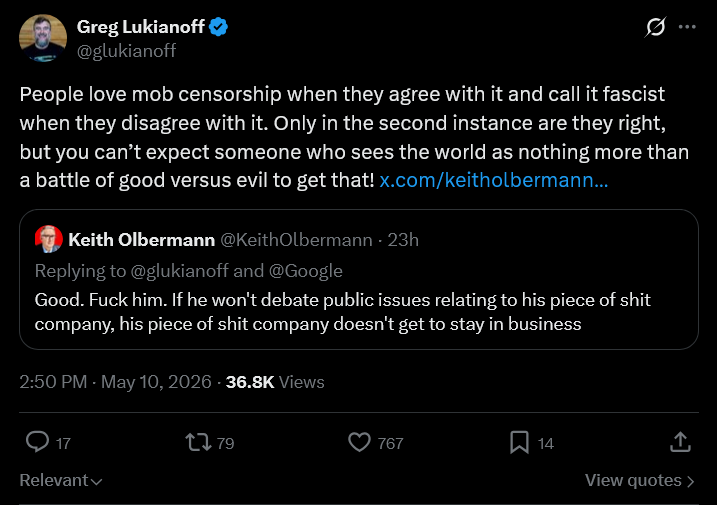
Greg Lukianoff with a real-time reminder of why we must always be on guard against threats to free speech.
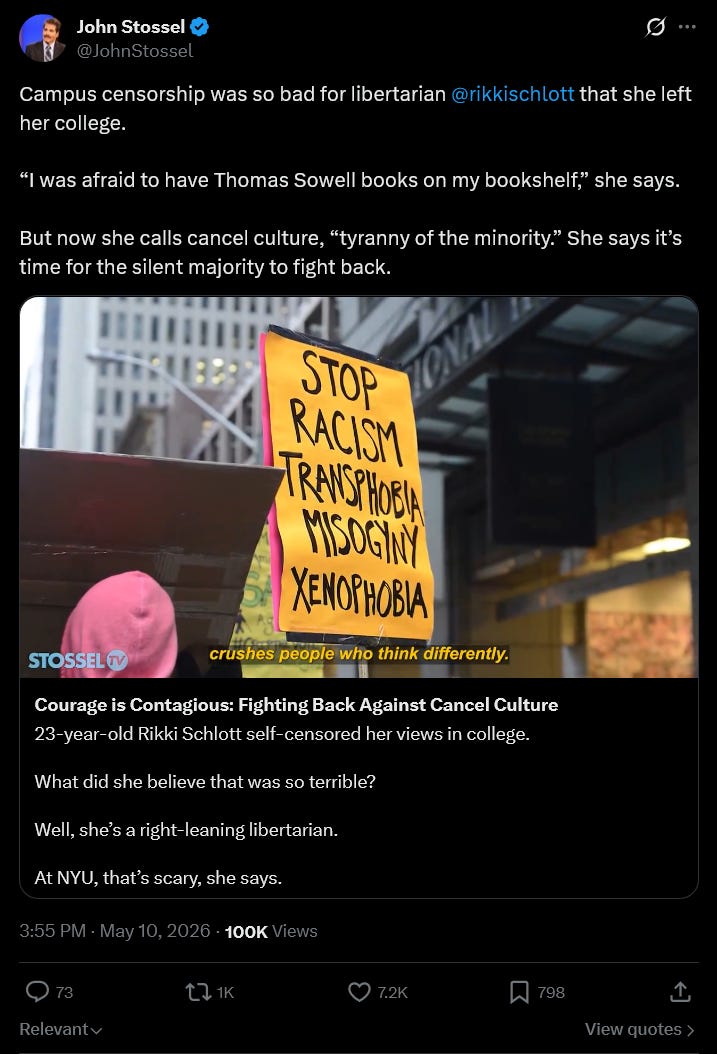
John Stossel profiles free-speech advocate Rikki Schlott. If you don’t know her story, it’s the epitome of cancel culture.
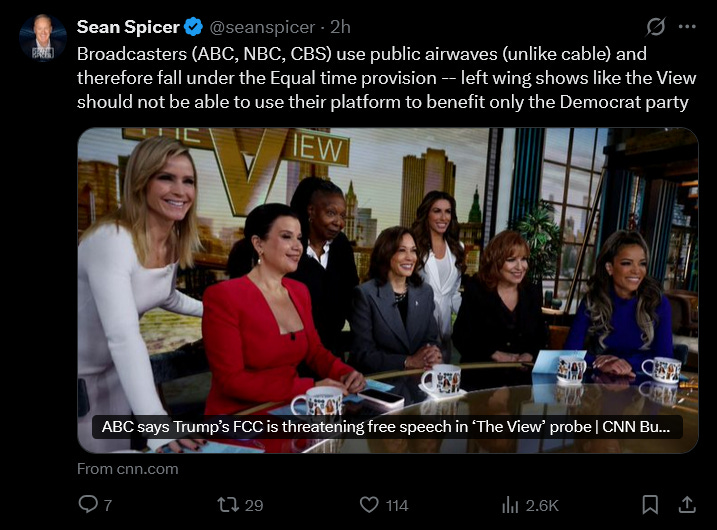
Sean Spicer doesn’t buy the knee-jerk First Amendment defense of legacy TV networks. They use public airwaves and shouldn’t be allowed to broadcast partisan propaganda, he claims.