A round-up of the latest and best insight on the rise of illiberalism in the public discourse:
Sarah McLaughlin: A UK teen mocked a local politician. Then the police showed up.

In August, four police officers turned up at the West Midlands home of Fraser, a 15-year-old Reform UK campaigner, and told him he was under arrest, with little explanation beyond a vague reference to social media. He was fingerprinted, photographed for a mugshot, and briefly questioned about his social media use and about Wolverhampton Tory councillor Simon Bennett.
The apparent trigger, McLaughlin reports, was a run of Facebook posts mocking Bennett, including an edited photo giving him bunny ears and a jab that he’d stopped dressing like a rent boy once he wore a suit. Bennett reported the posts to police as possible harassment and malicious communications, and police said the case could involve a potential hate crime. Fraser is now represented by the Free Speech Union and, per the piece, still doesn’t know whether he’ll be charged.
At FIRE’s Free Speech Dispatch, Sarah McLaughlin argues the case previews something bigger:
“The question now won’t just be whether police will come knocking at your door over what you said online, but under what conditions you can speak online in the first place.under what conditions you can speak online in the first place.”
...
The UK’s problems with free expression on the internet, particularly where young people are involved, is about to get even more complicated. The government remains intent on ensuring its upcoming under-16 social media ban — one that would keep teens like Fraser from engaging on social media entirely — isn’t flouted like Australia’s landmark legislation. So officials have now acknowledged that they may require “hard checks” in the form of passport or license verification to age-gate social media platforms. UK social media users concerned about a police knock at the door may soon have even more to worry about.
Robby Soave: The Shane Gillis SNL Backlash Is Really Stupid
Shane Gillis was hired and then abruptly fired by SNL in 2019 after offensive jokes from his past surfaced. His career has since taken off, he’s returned repeatedly as host, and on October 10 he used his monologue to riff on how women dress at the gym. Actor Dan Levy responded by tying that kind of joke to an environment in which women are sexually assaulted, and The View‘s Sara Haines made a similar argument. At Reason, Robby Soave notes that the same monologue went after men, gay men, Gillis’s own sisters, and, repeatedly, Gillis himself:
“He’s doing observational comedy, and no one is spared, not even Gillis. He even makes a joke about how he might unintentionally come off as threatening to women, because he’s a big ugly guy.
It would be weird if women wearing skin-tight clothing at the gym was for some reason an off-limits subject for comedians. Why? It’s OK to insult men’s appearance, but not women’s? Is that really the standard? Of course not.
Indeed, it is trivially easy to find examples of liberal-coded comedians (Gillis is one of those right-coded, anti–political correctness, Joe Rogan types), mocking the appearances of specific women. Jimmy Kimmel’s recent monologue went after Katie Zacharia, the Trump administration’s new press secretary, for her looks. Kimmel insinuated that she’s a dumb blonde who was picked just because she’s attractive. He even showed a photo of her at the gym, dressed semi-provocatively!
Ian M. Giatti: Christian apologist Frank Turek claims Baylor U ‘did everything they could to shut down’ outreach event
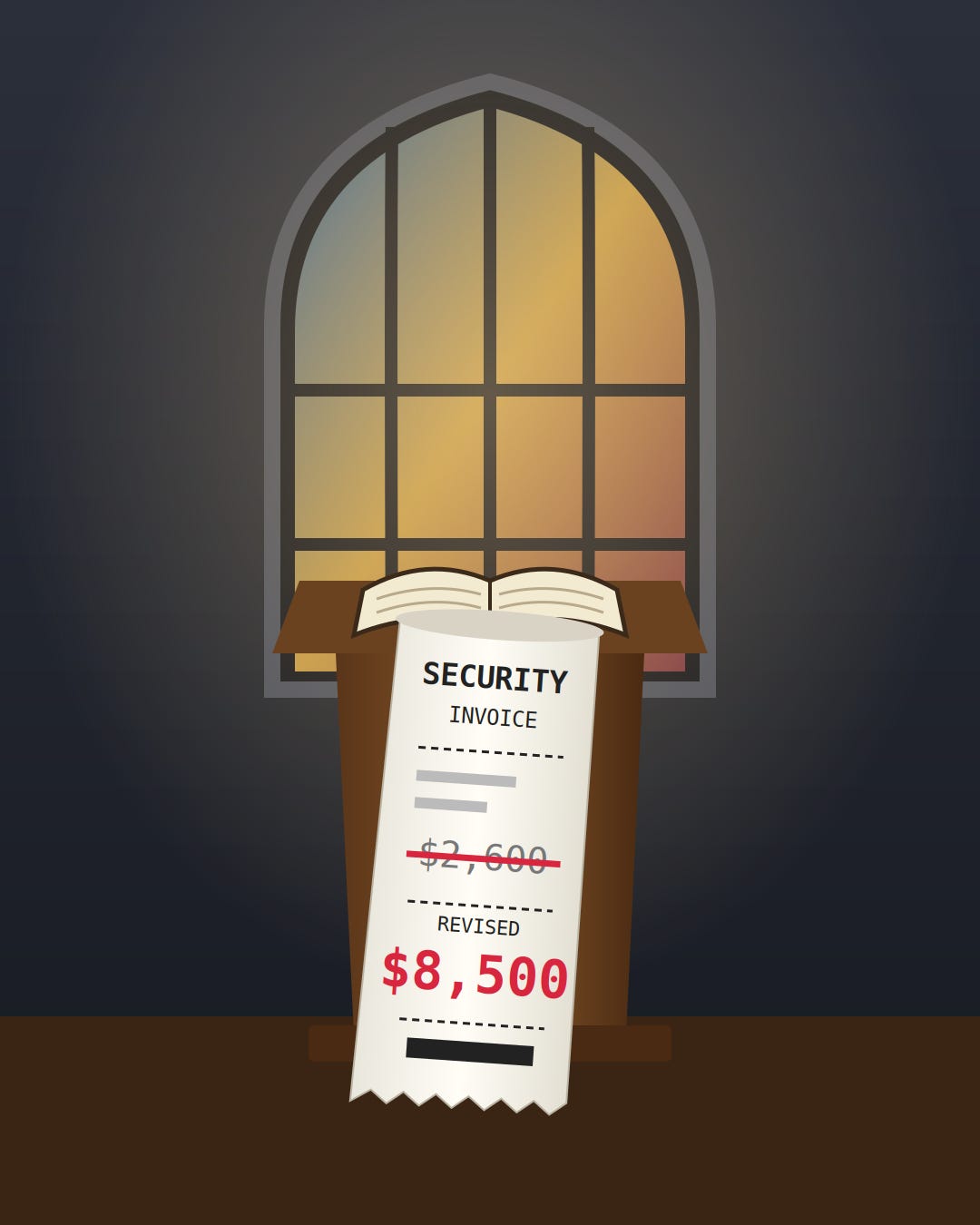
Baylor’s chapter of Ratio Christi, a national Christian apologetics group, booked Frank Turek and Ratio Christi CEO Corey Miller for an October 5 event in Waco Hall built around two questions: Is Christianity true? Is it good? Then, according to Turek, the university’s security estimate jumped from $2,600 to $8,500 at the last minute.
The event had also been designated an “expressive activity,” which restricted marketing and limited attendance largely to the campus community, and Turek says livestreaming was banned too. The organizers postponed.
Baylor tells The Christian Post that the student group repeatedly failed to submit required documentation, that security costs are the host organization’s responsibility under university policy, and that the students chose to postpone rather than look for a cheaper venue, adding that campus leaders stand ready to support a future event.
Maybe so. But by Baylor’s own account the full security estimate landed at the last minute, and variable security fees are one of the oldest ways to price unwelcome speakers off campus. As Turek put it:
“In 20 years of going to college campuses, I’ve never experienced more pushback, and more last-minute changes that could be classified as extortion to thwart my presentation on the evidence for Christianity than we just experienced at Baylor University,” said Turek. “Yes, the Baylor University that advertises itself as a Christian school — a Baptist school.”
Around X
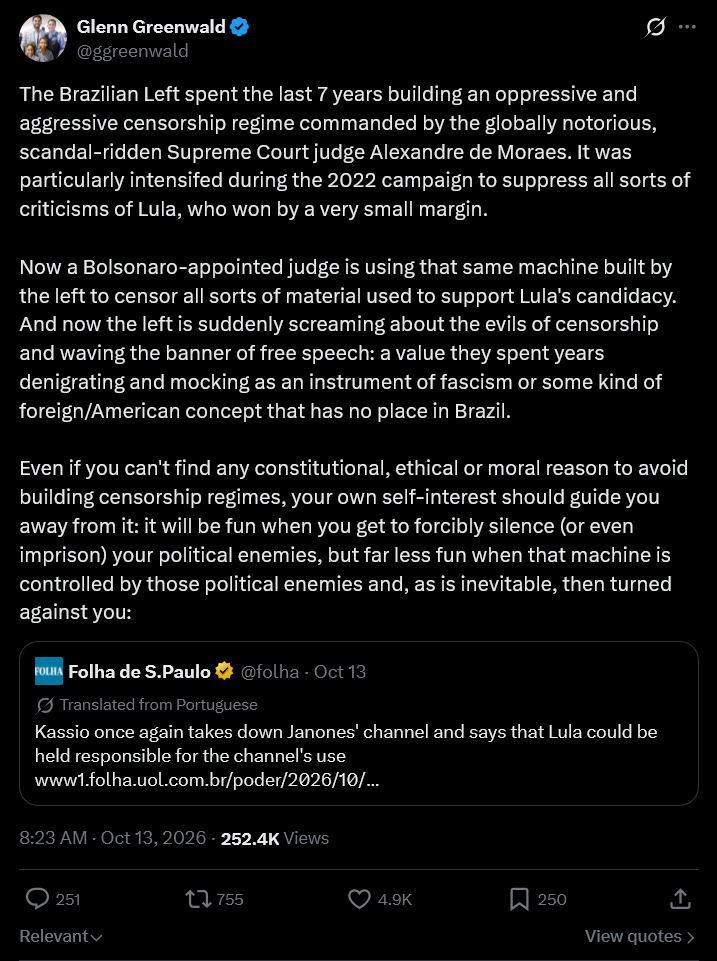
Glenn Greenwald argues that Brazil’s left spent seven years building a censorship apparatus around Supreme Court justice Alexandre de Moraes, used especially during the 2022 campaign to suppress criticism of Lula, and is now rediscovering free speech because a Bolsonaro-appointed judge is using the same machinery against pro-Lula material. His warning: the machine always changes hands eventually.
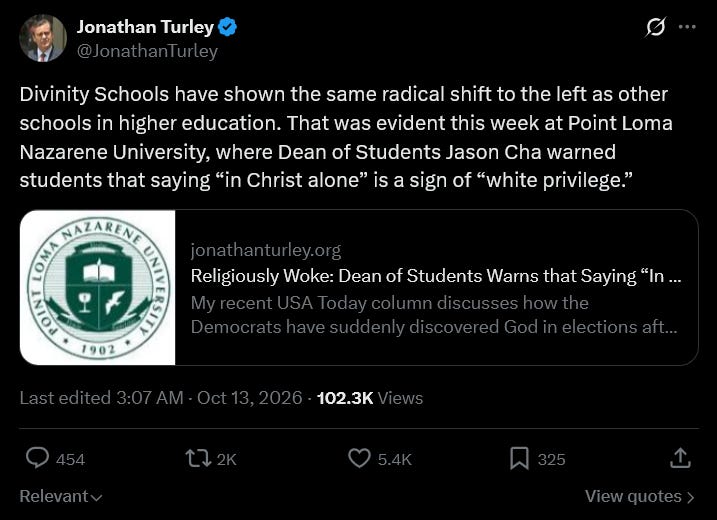
Jonathan Turley flags a dean of students at Point Loma Nazarene University who, Turley says, warned students that saying "in Christ alone" is a sign of white privilege. At a Christian university. Baylor, take notes.
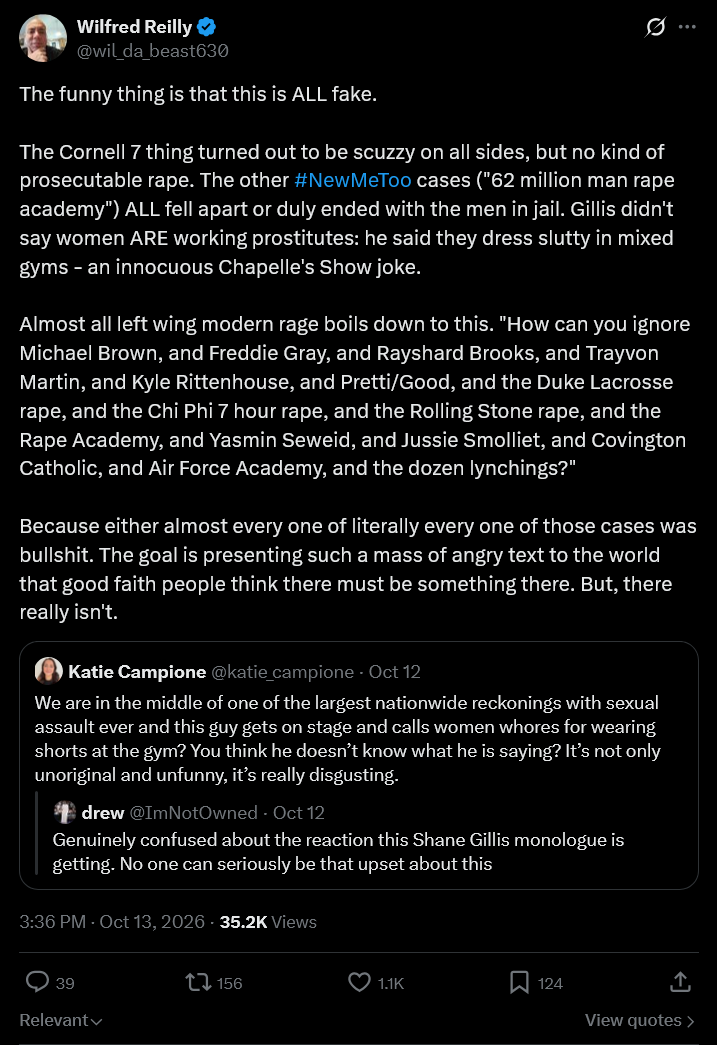
Finally, Wilfred Reilly weighs in on the Gillis pile-on: Gillis never called women prostitutes, he joked that they dress provocatively at mixed gyms, and Reilly argues that almost all modern left-wing outrage collapses the moment anyone looks at it closely.